
ERC@60 Conference

Date: 29th January 2026

Location: Gresham Hotel, Dublin 1

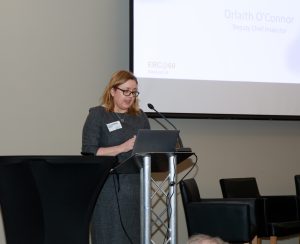
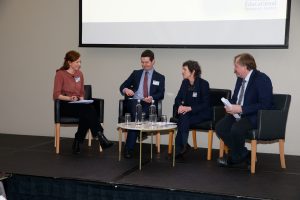
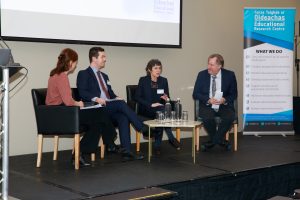
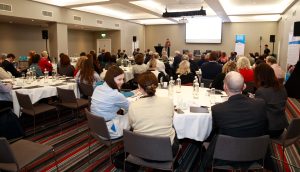
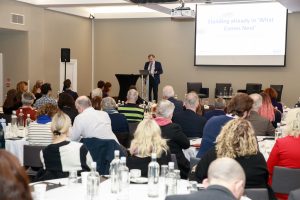
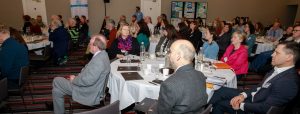
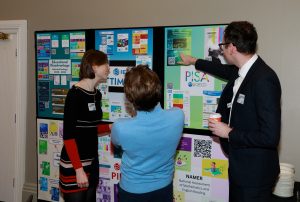
The ERC@60 Conference brought together researchers, educators, policymakers and partners to celebrate six decades of educational research and impact. Marking the 60th anniversary of the Educational Research Centre, the event provided a platform to reflect on the Centre’s contributions to education research, assessment and policy in Ireland and beyond, and to look ahead to emerging priorities.

The programme featured keynote talks, panel discussions and presentations highlighting key research themes, lessons learned over the years, and future directions for evidence-informed practice and policy. Delegates engaged in rich discussion about evolving challenges in education and the role of research in supporting effective solutions. The conference was an opportunity not only to honour the ERC’s history but also to strengthen connections across the education and research community as we enter the next decade of work.

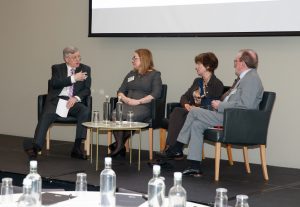
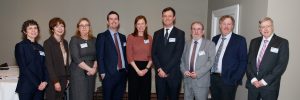
Speakers included: Prof Eugene Wall, Dr Peter Archer, Orlaith O’Connor (DEY), Prof Zita Lysaght (DCU), Prof Christian Christrup Kjeldsen (IEA), Dr Jude Cosgrove (EC JRC) and Aidan Clerkin (ERC).

📋Agenda:

  • 8.30 – 9.30: Registration (with Tea/Coffee)
  • 9.30 – 9.50: Introduction and Address by Chairperson of the ERC
  • 9.50 – 11.00: Session 1: A reflection on 60 years of the ERC
  • 11.00 – 11.30: Tea/coffee break
  • 11.30 – 12.45: Session 2: Looking ahead: Perspectives on the future of educational research
  • 12.45 – 13.00: Concluding remarks
  • 13.00 – 14.00: Lunch

Photos

An chéad triail dá leithéid – Triail litearthachta iarbhunscoile as Gaeilge

An chéad triail dá leithéid – Triail litearthachta iarbhunscoile as Gaeilge

6ú Deireadh Fómhair 2025

I gcomhar leis an tSeirbhís Náisiúnta Síceolaíochta Oideachais ón Roinn Oideachais agus Óige, sheol an Foras Taighde ar Oideachas an triail ‘Measúnú agus Diagnóisic Litearthachta don Iarbhunscoil – Gaeilge’ (MDLI-G) inniu.
Is triail litearthachta Gaeilge í an triail seo, an chéad triail dá leithéid ag leibhéal na hiarbhunscoile, agus tá sé le bheith mar uirlis fhoghlama thábhachtach i scoileanna lán-Ghaeilge.

Forbraíodh an t-ábhar go sonrach don chomhthéacs Gaeilge, agus forbraíodh na noirm sna scoileanna lán-Ghaeilge le haghaidh scoláirí na chéad agus na tríú bliana. Díríonn an triail ar chúig scil litearthachta sa Ghaeilge: léamhthuiscint, mearléitheoireacht, léitheoireacht focal, scríbhneoireacht agus litriú.

Is féidir an triail a úsáid in éineacht leis an triail Béarla, PPAD-E, chun léargas cuimsitheach a ghnóthú de riachtanais litearthachta an scoláire. Tá tuilleadh eolais maidir le MDLI-G, PPAD-E agus trialacha eile ar fáil ag www.tests.erc.ie.

First of its kind – Post-Primary Literacy Test in Irish

6th October 2025

The Educational Research Centre in collaboration with the National Educational Psychological Service of the Department of Education and Youth today launched the ‘Measúnú agus Diagnóisic Litearthachta don Iarbhunscoil – Gaeilge’ (MDLI-G) test.

This test of literacy in Irish, is the first of its kind at post-primary level and is set to become a key tool for learning in Irish-medium schools.

With content specifically developed for Irish-language contexts, norms were developed in Irish-medium schools for First- and Third-Year students. The test examines five key literacy skills in Irish: reading comprehension, reading fluency, word reading, writing, and spelling.

The test can be used alongside its English-language sister test, PPAD-E, to obtain a rounded picture of a student’s literacy needs. More information on MDLI-G, PPAD-E and other ERC tests can be found at www.tests.erc.ie.

An chéad triail dá leithéid – Triail litearthachta iarbhunscoile as Gaeilge

An chéad triail dá leithéid – Triail litearthachta iarbhunscoile as Gaeilge

6ú Deireadh Fómhair 2025

I gcomhar leis an tSeirbhís Náisiúnta Síceolaíochta Oideachais ón Roinn Oideachais agus Óige, sheol an Foras Taighde ar Oideachas an triail ‘Measúnú agus Diagnóisic Litearthachta don Iarbhunscoil – Gaeilge’ (MDLI-G) inniu.
Is triail litearthachta Gaeilge í an triail seo, an chéad triail dá leithéid ag leibhéal na hiarbhunscoile, agus tá sé le bheith mar uirlis fhoghlama thábhachtach i scoileanna lán-Ghaeilge.

Forbraíodh an t-ábhar go sonrach don chomhthéacs Gaeilge, agus forbraíodh na noirm sna scoileanna lán-Ghaeilge le haghaidh scoláirí na chéad agus na tríú bliana. Díríonn an triail ar chúig scil litearthachta sa Ghaeilge: léamhthuiscint, mearléitheoireacht, léitheoireacht focal, scríbhneoireacht agus litriú.

Is féidir an triail a úsáid in éineacht leis an triail Béarla, PPAD-E, chun léargas cuimsitheach a ghnóthú de riachtanais litearthachta an scoláire. Tá tuilleadh eolais maidir le MDLI-G, PPAD-E agus trialacha eile ar fáil ag www.tests.erc.ie.

First of its kind – Post-Primary Literacy Test in Irish

6th October 2025

The Educational Research Centre in collaboration with the National Educational Psychological Service of the Department of Education and Youth today launched the ‘Measúnú agus Diagnóisic Litearthachta don Iarbhunscoil – Gaeilge’ (MDLI-G) test.

This test of literacy in Irish, is the first of its kind at post-primary level and is set to become a key tool for learning in Irish-medium schools.

With content specifically developed for Irish-language contexts, norms were developed in Irish-medium schools for First- and Third-Year students. The test examines five key literacy skills in Irish: reading comprehension, reading fluency, word reading, writing, and spelling.

The test can be used alongside its English-language sister test, PPAD-E, to obtain a rounded picture of a student’s literacy needs. More information on MDLI-G, PPAD-E and other ERC tests can be found at www.tests.erc.ie.

New ERC report on continuity and change in Ireland’s primary and post-primary schools and classrooms

The ERC is delighted to announce the publication of a new report: Continuity and change in Ireland’s schools and classrooms: TIMSS 2011-2023.

This report, drawing on TIMSS data at both primary and post-primary levels, focuses on:

  • the composition, resources, and environments of schools
  • teaching and assessment practices in mathematics and science lessons
  • challenges and opportunities shaping teaching and learning
  • differences by school gender and school DEIS status

Read the full report here

Check out the infographic here

Explore the appendices for a deeper dive into the data here


New ERC report on environmental knowledge and attitudes in Irish schools

The ERC publishes today a new report: Environmental knowledge and attitudes in Ireland’s schools: Findings from TIMSS 2023.

This report presents new findings for Ireland on two aspects of students’ environmental awareness that were captured for the first time in the 2023 cycle of TIMSS (Trends in International Mathematics and Science Study):

  • environmental knowledge – part of the science assessment, drawing on selected items related to environmental and climate issues, and
  • attitudes towards environmental preservation.

The report presents data for Fourth Class (primary) and Second Year (post-primary) students from the TIMSS 2023 study. It also explores environmentally relevant practices and attitudes of their parents, teachers, and principals, as recorded via questionnaires.

Key findings include:

  • A significant gender difference in environmental knowledge among Second Year students, but not at Fourth Class;
  • More positive attitudes and practices towards environmental education in primary than in post-primary settings;
  • A need expressed by both primary and post-primary teachers of science for dedicated professional learning related to the teaching of environmentalism and sustainability.

The findings, which are novel in an Irish context, are discussed with reference to the broader national policy context of environmental awareness in schools.

The report is authored by Aidan Clerkin, George Piccio, Sylvia Denner, Vasiliki Pitsia and Gráinne McHugh.

It can be downloaded here, with an infographic summary here.

New Data Sharing Agreements between State Examinations Commission (SEC) and the ERC

The State Examinations Commission has entered into a Data Sharing Agreement with the Educational Research Centre for DEIS and SET Allocation on 13 August 2025.

Data Sharing Agreement available here:

SECERC 025/240718


The State Examinations Commission has entered into a Data Sharing Agreement with the Educational Research Centre for Studies, Test Development, and Independent Research on 13 August 2025.

Data Sharing Agreement available here:

SECERC 026/240718

New Data Sharing Agreements between State Examinations Commission (SEC) and the ERC

The State Examinations Commission has entered into a Data Sharing Agreement with the Educational Research Centre for DEIS and SET Allocation on 13 August 2025.

Data Sharing Agreement available here.


The State Examinations Commission has entered into a Data Sharing Agreement with the Educational Research Centre for Studies, Test Development, and Independent Research on 13 August 2025.

Data Sharing Agreement available here.

New ERC report on trends in student experiences in school and attitudes to mathematics and science

The ERC publishes today a new report: Trends in students’ school experiences and attitudes towards mathematics and science: TIMSS 2015-2023.

This report presents data for Fourth Class (primary) and Second Year (post-primary) students from the TIMSS 2023 study, and identifies trends relative to previous cycles of TIMSS in 2015 and 2019). It examines the experiences of students in relation to their attendance at school, sense of belonging, and experiences of bullying. Also presented in the report are students’ attitudes towards mathematics and science; in particular, the extent to which students like learning, feel confident, and value mathematics and science.

Key findings include:

· Increasing rates of student absence from school between 2019 and 2023.

· A gradual decline between 2015 and 2023 in liking mathematics and science and confidence in mathematics and science.

· Boys liked learning mathematics and were more confident in mathematics than girls.

· At primary, boys and girls reported similar levels of confidence in science, while at post-primary boys were more confident than girls.

· At Fourth Class, more students in DEIS Urban schools very much liked learning mathematics compared to students in other schools.

The findings are discussed in the report with reference to the broader national policy context and related national and international research.

The report is authored by Sylvia Denner, Aidan Clerkin, Vasiliki Pitsia and Gráinne McHugh. It can be downloaded here, with an infographic summary here.

New ERC report on trends in student experiences in school and attitudes to mathematics and science

The ERC publishes today a new report: Trends in students’ school experiences and attitudes towards mathematics and science: TIMSS 2015-2023.

This report presents data for Fourth Class (primary) and Second Year (post-primary) students from the TIMSS 2023 study, and identifies trends relative to previous cycles of TIMSS in 2015 and 2019). It examines the experiences of students in relation to their attendance at school, sense of belonging, and experiences of bullying. Also presented in the report are students’ attitudes towards mathematics and science; in particular, the extent to which students like learning, feel confident, and value mathematics and science.

Key findings include:

  • · Increasing rates of student absence from school between 2019 and 2023.
  • · A gradual decline between 2015 and 2023 in liking mathematics and science and confidence in mathematics and science.
  • · Boys liked learning mathematics and were more confident in mathematics than girls.
  • · At primary, boys and girls reported similar levels of confidence in science, while at post-primary boys were more confident than girls.
  • · At Fourth Class, more students in DEIS Urban schools very much liked learning mathematics compared to students in other schools.

The findings are discussed in the report with reference to the broader national policy context and related national and international research.

The report is authored by Sylvia Denner, Aidan Clerkin, Vasiliki Pitsia and Gráinne McHugh. It can be downloaded here, with an infographic summary here.

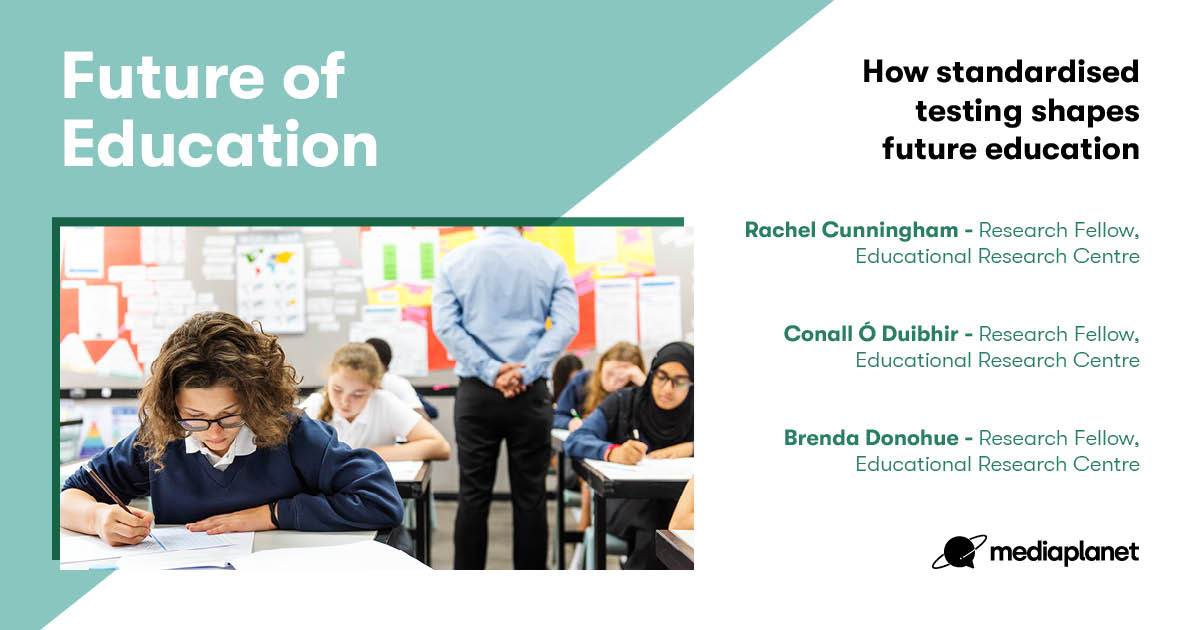
How standardised testing shapes future education – the Future of Education Report

The Future of Education Report 2025 launched today, highlighting how by fostering collaboration, Ireland is building towards an inclusive and accessible lifelong-learning system.

ERC researchers Rachel Cunningham, Conall Ó Duibhir and Brenda Donohue have written an article on the role and future of standardised testing in the Irish education system.

Visit https://www.businessnews.ie/education/how-standardised-testing-shapes-future-education/ to read more #futureofeducationie2025

How standardised testing shapes future education – the Future of Education Report

The Future of Education Report 2025 launched today, highlighting how by fostering collaboration, Ireland is building towards an inclusive and accessible lifelong-learning system.

ERC researchers Rachel Cunningham, Conall Ó Duibhir and Brenda Donohue have written an article on the role and future of standardised testing in the Irish education system.

Visit https://www.businessnews.ie/education/how-standardised-testing-shapes-future-education/ to read more

ERC launches final report of the longitudinal Digital Learning Framework Evaluation

ERC launches a new report on students’ experience of P-TECH Ireland

TIMSS 2023 national report will launch at 9am Wednesday 4th December

ERC launches the TIMSS 2023 national report

PISA 2025 – Message to schools & teachers

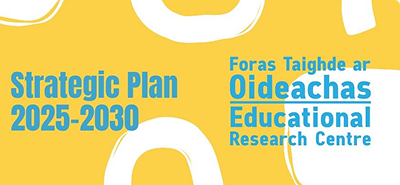
ERC publishes Strategic Plan for 2025-2030

ERC publishes PIRLS 2021: Exploring the contexts for reading of primary school pupils in Ireland

Eolas ón ERC – April 2025 Newsletter

New ERC report on environmental knowledge and attitudes in Irish schools

The ERC publishes today a new report: Environmental knowledge and attitudes in Ireland’s schools: Findings from TIMSS 2023.

This report presents new findings for Ireland on two aspects of students’ environmental awareness that were captured for the first time in the 2023 cycle of TIMSS (Trends in International Mathematics and Science Study):

  • environmental knowledge – part of the science assessment, drawing on selected items related to environmental and climate issues, and
  • attitudes towards environmental preservation.

The report presents data for Fourth Class (primary) and Second Year (post-primary) students from the TIMSS 2023 study. It also explores environmentally relevant practices and attitudes of their parents, teachers, and principals, as recorded via questionnaires.

Key findings include:

  • A significant gender difference in environmental knowledge among Second Year students, but not at Fourth Class;
  • More positive attitudes and practices towards environmental education in primary than in post-primary settings;
  • A need expressed by both primary and post-primary teachers of science for dedicated professional learning related to the teaching of environmentalism and sustainability.

The findings, which are novel in an Irish context, are discussed with reference to the broader national policy context of environmental awareness in schools.

The report is authored by Aidan Clerkin, George Piccio, Sylvia Denner, Vasiliki Pitsia and Gráinne McHugh.

It can be downloaded here, with an infographic summary here.


This site is registered on wpml.org as a development site. Switch to a production site key to remove this banner.