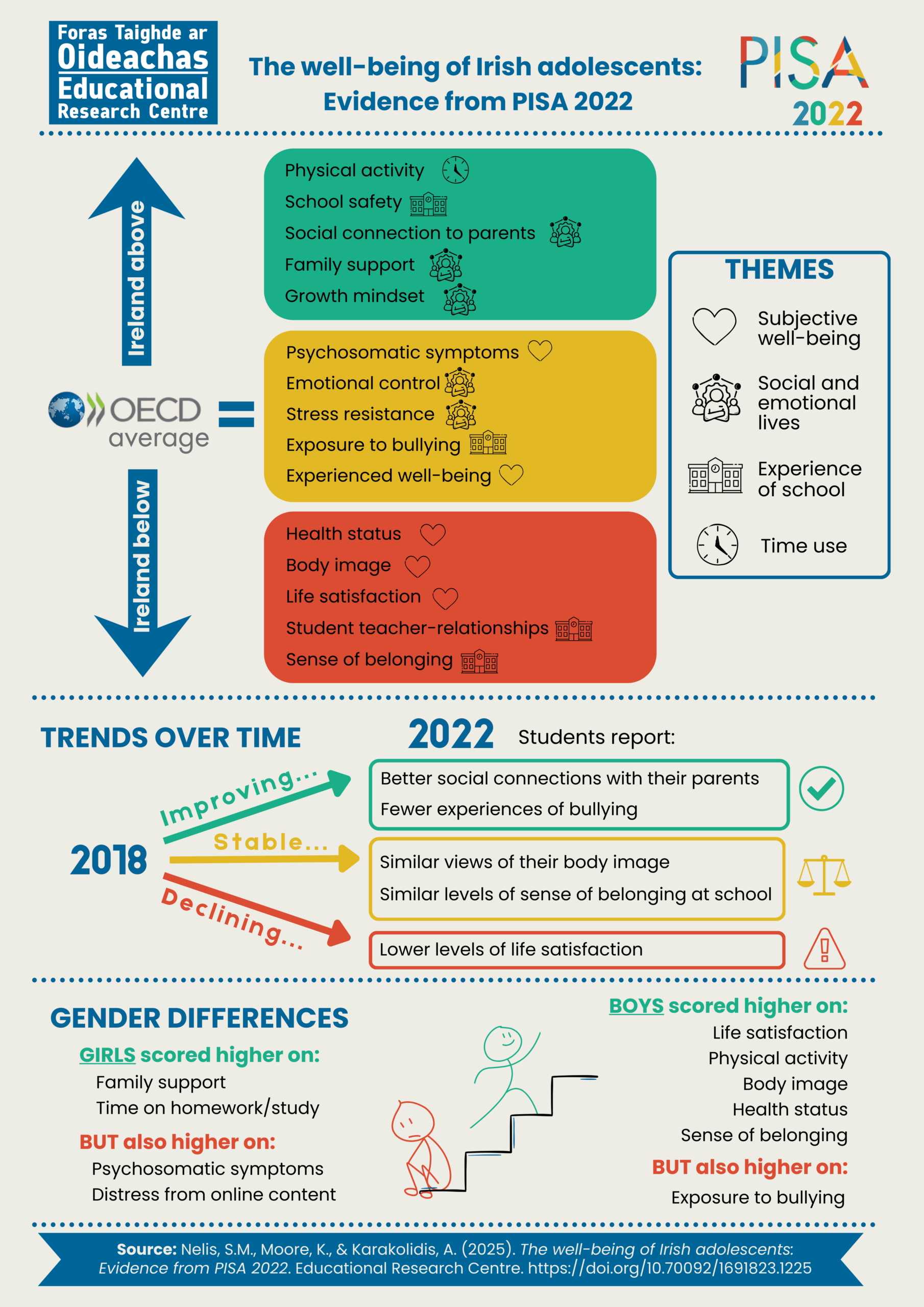
This report provides a wide–ranging set of findings from PISA 2022 on 15–year–old students’ well–being in Ireland. Compared to OECD peers, it highlights areas of strength for Irish students, such as social connection to family and friends, growth mindset, physical activity, sense of school safety, distress from online content and cyberbullying; comparable results in areas such as psychosomatic symptoms, experienced well–being and bullying; and also highlights the need for improvement in students’ views on their health, body image, life satisfaction, relationships with their teachers and sense of belonging at school. Gender gaps were evident as female students experience poorer well–being across a large range of indicators compared to their male peers. Ensuring that appropriate systems, services, and supports are in place for adolescent well–being should remain a key policy priority.
Publication date: December 15 2025
Supporting Infographic
Click to enlarge
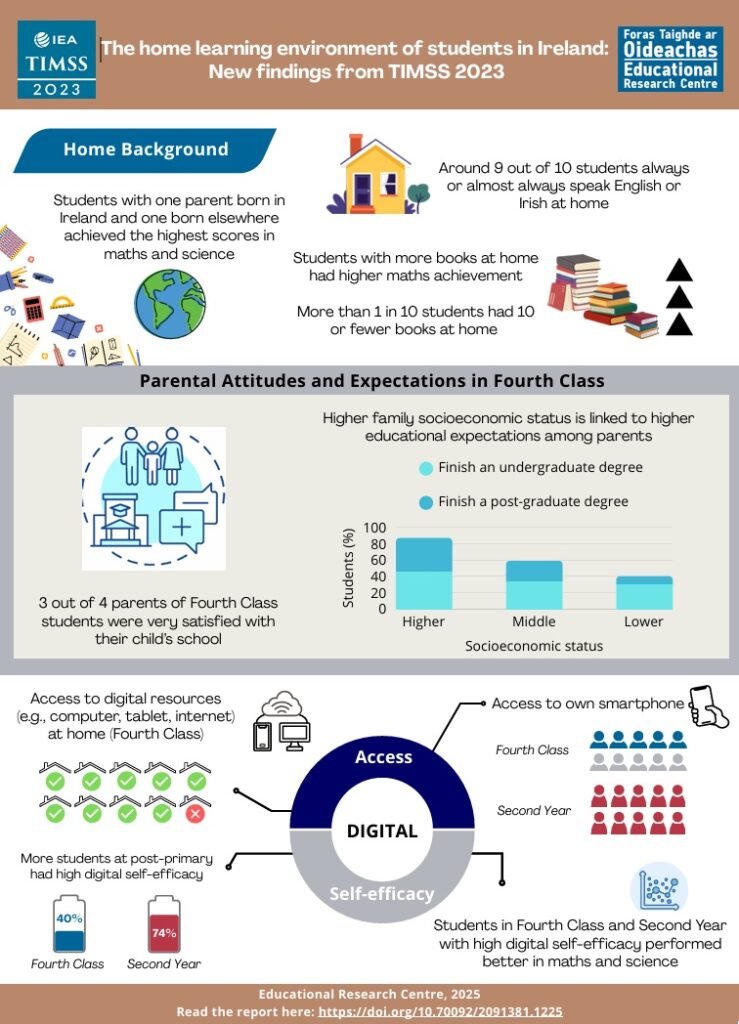
This report focuses on the home learning environment of Fourth Class and Second Year students in Ireland using data from TIMSS (Trends in International Mathematics and Science Study) 2023. It describes findings about students’ socioeconomic status, the availability of selected home resources for learning and home possessions, digital resources at home and use of digital resources for learning, parental education and occupation, home language, early childhood learning and skills, and the attitudes and expectations towards education of parents and students. These data are examined at a nationally representative level and for key subgroups of students: by gender, socioeconomic status, and school DEIS (Delivering Equality of Opportunity in Schools) status. Implications for policymakers in the Irish national context are discussed.
Infographic
Drawing on data from the PISA 2022 national teacher questionnaire, the present report provides an overview of post–primary mathematics teachers in Ireland, their backgrounds and professional profiles, their working life, their views on teaching mathematics, as well as their teaching practices and use of digital resources in Ireland.
Published in: IEA Compass: Briefs in Education
Abstract:
This Compass Brief examines gender differences in students’ civic knowledge and attitudes toward globally important social topics. It uses data from IEA’s International Civic and Citizenship Education Study (ICCS) 2022, which assessed the civic knowledge of eighth-grade students across 22 countries. The findings from ICCS 2022 indicate a notable gender gap in civic knowledge in most participating countries, with boys scoring lower on average than girls in all such cases. Students exhibited strong positive attitudes toward gender equality, although boys were significantly less likely than girls on average to express support for it. The disparity in support for gender equality was larger than for any other indicator. In most countries, and on average internationally, boys were significantly less likely than girls to express positive attitudes about environmental protection and concern about global environmental threats. In the event of national emergencies in democratic systems, boys in half of the participating countries were significantly more likely than girls to accept restrictions, such as prohibiting large gatherings, imposing travel restrictions, or identifying people whose behavior might put others at risk. These gender differences in attitudes present challenges for building more democratic, equitable, and sustainable societies worldwide.
Clerkin, A., Welmond, M., & Gregory, L. (2025). International Gender Differences in Civic Knowledge and Attitudes: Implications and Ways Forward. IEA Compass: Briefs in Education #28. IEA. https://www.iea.nl/sites/default/files/2025-10/CB28%20ICCS%20Gender%20Differences.pdf
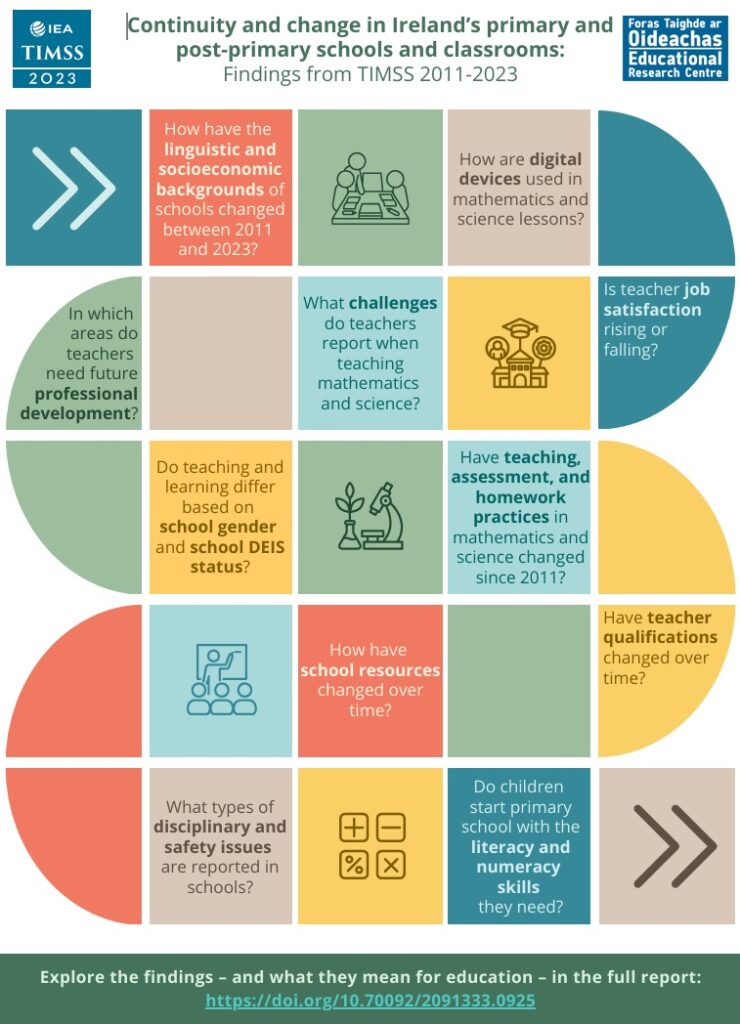
This report provides a comprehensive analysis of developments in schools, classrooms, and the teaching and learning of mathematics and science at primary and post-primary levels in Ireland between 2011 and 2023. Drawing on data from the Trends in International Mathematics and Science Study (TIMSS), collected from students, teachers, and school principals, the report examines trends in school composition, resources, and learning environments. It also explores the organisation and delivery of mathematics and science instruction, assessment practices, instructional challenges, and the integration of digital devices in teaching and learning. These findings are contextualised within national education policies and initiatives, highlighting how Ireland’s education system has adapted to changing pedagogical, technological, and societal expectations. By tracing patterns of continuity and change, the report provides valuable insights into the evolving educational landscape and provides a robust evidence base to inform future policy, practice, and evaluation in mathematics and science education.
e-Appendices associated with this publication: Chapter 2, Chapter 3, Chapter 4, Chapter 5, Chapter 6
Infographic
Published in: Irish Educational Studies 2025
Abstract:
Randomised controlled trials (RCTs) are the gold standard for evaluating educational interventions. However, Ireland is approximately 20 years behind the US and 10 years behind the UK in implementing randomised controlled trials in education. This paper examines the role of RCTs in advancing educational research in Ireland, building on a recent commentary by Gilleece and Clerkin (2024. “Towards More Robust Evaluation of Policies and Programmes in Education: Identifying Challenges in Evaluating DEIS and Reading Recovery.” Irish Educational Studies). It explores the fundamental characteristics of RCTs, including randomisation, the use of control groups, blinding (or masking), sampling, power and analytical considerations. Additionally, the paper discusses other key aspects such as process evaluations, economic evaluations, ethical issues, and the importance of transparency in conducting RCTs. Selected examples of RCTs conducted in Ireland are presented to make the discussion directly relevant to the Irish context. RCTs are an essential tool for evidence-informed educational policy and practice and, where appropriate and feasible, can be used to address key national issues such as the Literacy, Numeracy, and Digital Literacy Strategy (2024-2033) implementation plan and the use of AI in education. We hope that this paper will serve as a practical guide for policymakers, researchers, and educators and will stimulate further discussion on RCTs in Irish education.
Slattery, E. J., Clerkin, A., Gilleece, L., Butler, D., Marshall, K., & Hedges, L. V. (2025). Exploring randomised controlled trials in education: key features and selected examples from Ireland. Irish Educational Studies, 1-26. https://doi.org/10.1080/03323315.2025.2523301
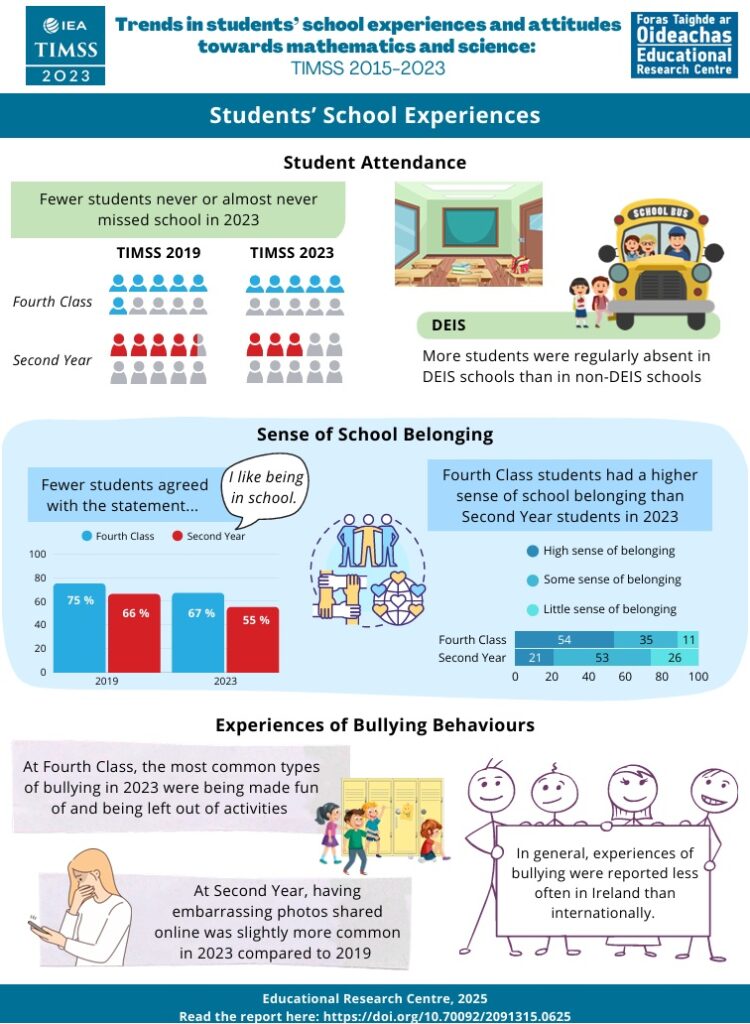
This report describes the school experiences and attitudes of Fourth Class and Second Year students in Ireland. Drawing on data from the 2023 cycle of the Trends in International Mathematics and Science Study (TIMSS), it delves into the experiences of students in relation to their attendance at school, sense of belonging, and experiences of bullying. Also discussed in the report are students’ attitudes towards mathematics and science; in particular, the extent to which students like learning, feel confident, and value mathematics and science. A key feature of this report is that it examines trends in students’ experiences and attitudes across the three most recent cycles of TIMSS (2015, 2019 and 2023). The findings point towards some noteworthy changes in Irish students’ experiences and attitudes over time. Finally, some conclusions and implications for policymakers in Ireland are outlined.
Infographic
Published in: Frontiers in Education
Abstract:
In large-scale assessments, the collection of high-quality representative data depends in part on (i) securing high participation rates and (ii) ensuring that participants demonstrate a sufficient level of engagement. This article explores the challenges of promoting participation and engagement with reference to Ireland’s experiences throughout multiple cycles of international and national large-scale assessments. Some factors likely to have influenced participation and/or engagement in the Irish context include: (i) the rising profile of large-scale assessments due to their prominence within a national strategy to improve literacy and numeracy; (ii) the transition of studies from paper-based to digital administration; (iii) the publication of new data protection legislation (both European and national); and (iv) pressures resulting from the COVID-19 pandemic. Initiatives implemented by Ireland’s national study centre with the aim of promoting participation in and engagement with large-scale assessments can be broadly classified as relating to consultation, promotion, and support. Lessons from Ireland’s experiences are discussed in relation to future avenues of investigation that may increase our understanding of facilitators and barriers to engagement. Ireland’s experiences offer valuable lessons that could inform practices in other countries.
Delaney, E., Clerkin, A., Karakolidis, A., Gilleece, L., & Millar, D. (2025). Promoting participation and engagement: Ireland’s experiences across three decades of international large-scale assessments [Perspective]. Frontiers in Education, Volume 10 – 2025. https://doi.org/10.3389/feduc.2025.1565557
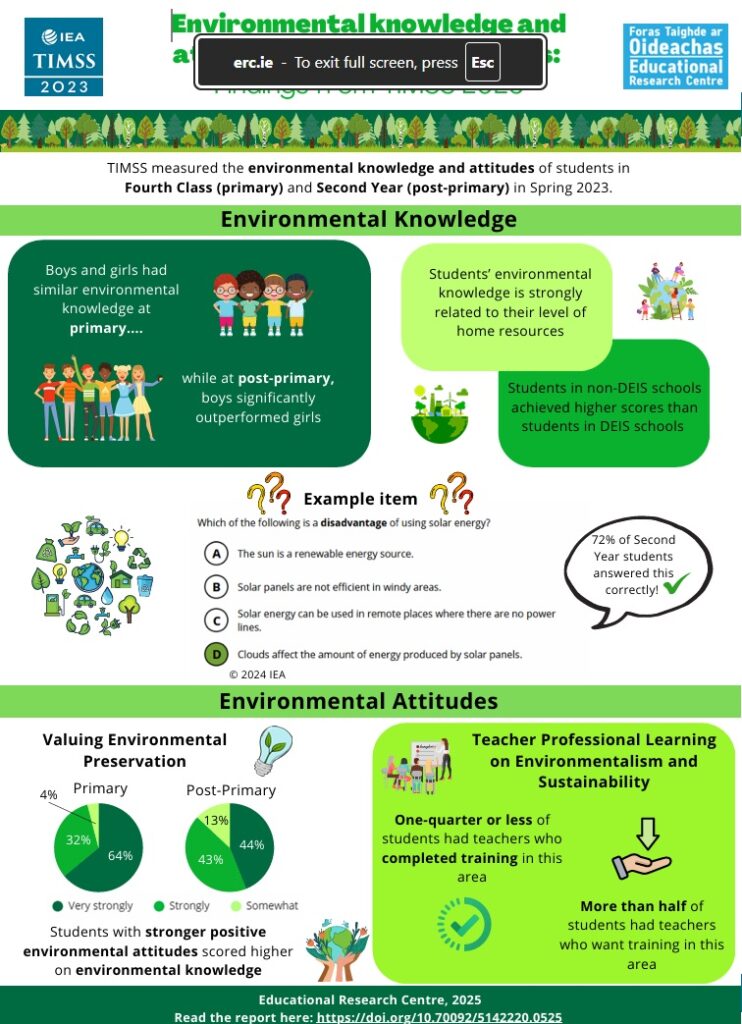
This report presents findings for Ireland for two aspects of students’ environmental awareness that were captured for the first time in the 2023 cycle of TIMSS (Trends in International Mathematics and Science Study). These are (i) students’ environmental knowledge – a subscale of the science assessment, drawing on selected items that are related to environmental and climate issues – and (ii) students’ attitudes towards environmental preservation. The report presents data for Fourth Class (primary) and Second Year (post-primary) students, and also describes environmentally relevant practices and attitudes of their parents, teachers, and principals, as recorded via questionnaires. The findings, which are novel in an Irish context, are discussed with reference to the broader national policy context of environmental awareness in schools.
Infographic
Published in: Studies in Educational Evaluation 2025
Abstract:
Equity in education is a policy priority internationally with policies and programmes designed to reduce gaps between more and less ‘advantaged’ learners. Evidence is mixed about the effectiveness of these, although limited use has been made of experimental or quasi-experimental designs in evaluation. Ireland’s main policy response to disadvantage since 2005 is the Delivering Equality of Opportunity in Schools (DEIS) programme. This study uses a regression discontinuity design (RDD) to examine the effect of DEIS on outcomes for post-primary schools between 2007 and 2016. Using national-level data across this period, we find no impact on school-level outcomes including examination performance and retention rates. Furthermore, we find no effect of DEIS on the percentages of low or high achieving students in key subjects. These null effects are found despite widely-held beliefs that DEIS has had a positive effect. Findings highlight the importance for evidence-informed policy of methods that allow for causal interpretation.
Gilleece, L., Clerkin, A., & Flannery, D. (2025). Reducing educational disadvantage across post-primary schools: Evidence from the first decade of the DEIS plan in Ireland. Studies in Educational Evaluation, 86, 101466. https://doi.org/https://doi.org/10.1016/j.stueduc.2025.101466
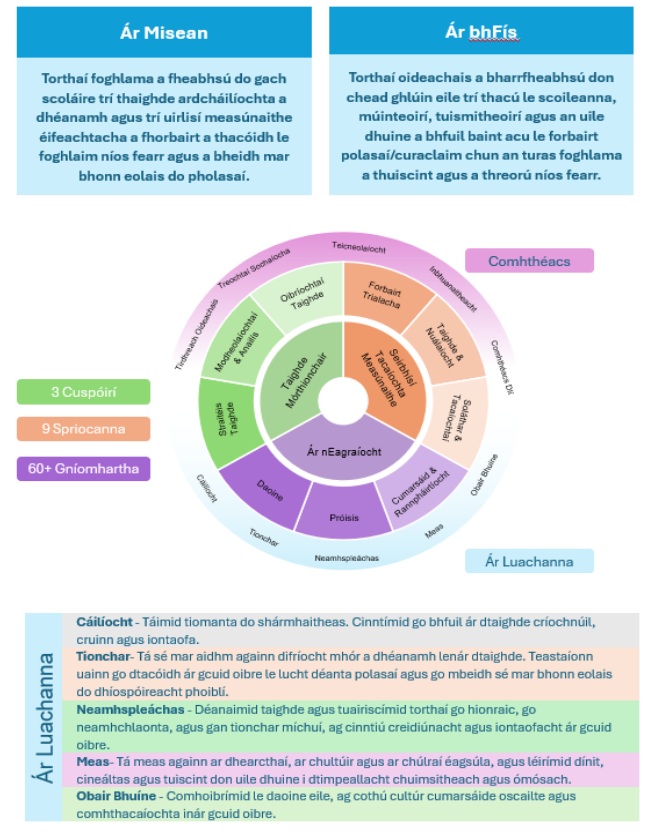
The ERC has published its Strategic Plan for 2025-2030, a blueprint that will guide the organisation through the next phase of growth, innovation, and impact in the fields of education and research in Ireland. This plan builds on the ERC’s almost 60-year history of producing evidence-based research insights and high-quality assessment support services that facilitate the improvement of educational practices and policies.
This strategic plan outlines a vision to not only sustain but to elevate the role of the ERC. We aim to do more, engage further, and strengthen the impact of our work. Our five-year goals are ambitious, and rightly so. They are designed to position the ERC as a leader in educational research, while comprehensively supporting Ireland’s educational community with actionable insights and innovative assessment support services.
The strategic plan is the result of wide consultation with educators, researchers, policymakers, and learners, and reflects the ERC’s evolving role as a national leader in educational evidence and evaluation.
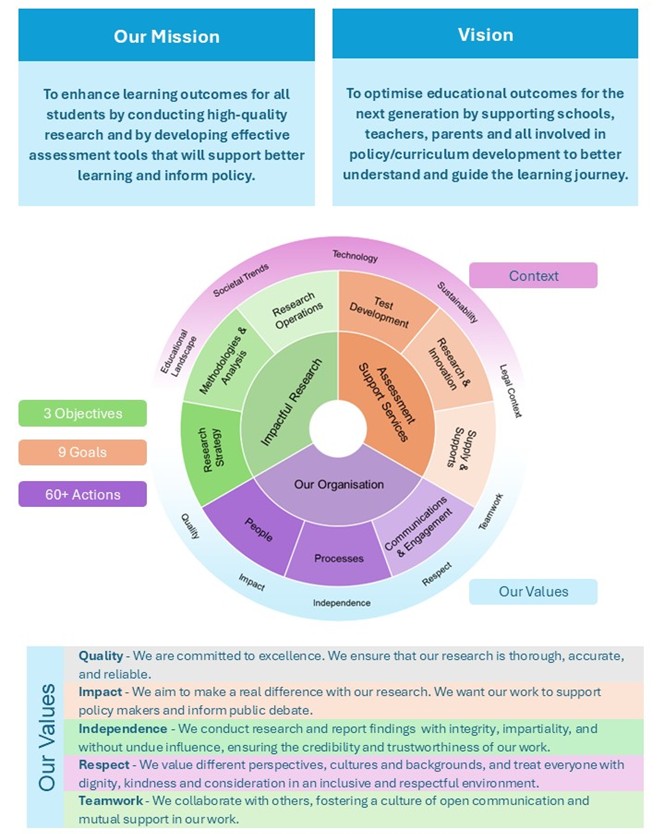
The ERC has published its Strategic Plan for 2025-2030, a blueprint that will guide the organisation through the next phase of growth, innovation, and impact in the fields of education and research in Ireland. This plan builds on the ERC’s almost 60-year history of producing evidence-based research insights and high-quality assessment support services that facilitate the improvement of educational practices and policies.
This strategic plan outlines a vision to not only sustain but to elevate the role of the ERC. We aim to do more, engage further, and strengthen the impact of our work. Our five-year goals are ambitious, and rightly so. They are designed to position the ERC as a leader in educational research, while comprehensively supporting Ireland’s educational community with actionable insights and innovative assessment support services.
The strategic plan is the result of wide consultation with educators, researchers, policymakers, and learners, and reflects the ERC’s evolving role as a national leader in educational evidence and evaluation.
The 2021 National Assessments of English Reading and Mathematics (NAMER) Context Report offers a comprehensive analysis of the factors influencing achievement in Second class English reading and Sixth class maths in Ireland. Due to pandemic-related disruptions, NAMER 2021 was postponed from 2020 and adapted to reduce the testing burden. Pupils had experienced approximately two months of remote teaching prior to returning to face-to-face instruction in March 2021.
Drawing on data from questionnaires administered to pupils, teachers, and school principals, this report situates performance outcomes within broader educational and socio-economic settings. Key variables examined include, pupil background, language, instructional time and homework, teacher professional development, digital practices in school and home, and school factors such as school gender, planning and COVID-19 impact.
Recommendations stress the need to build on existing good practice in schools as well as the strengthening initiatives to improve liking and confidence in reading and mathematics.
Published in: IEA Compass: Briefs in Education
Abstract:
In recent decades, large-scale assessments in Ireland have revealed consistent trends, phases of change, and some surprises. This Compass Brief explores how data from large-scale assessments informed Ireland’s National Literacy and Numeracy Strategy 2011–2020, particularly regarding priorities, target-setting, and monitoring. It also examines how related initiatives including curriculum redevelopment and standardized testing reform have reflected large-scale assessment findings. Looking ahead, we outline how large-scale assessments can inform Ireland’s next National Strategy to 2033, which encompasses digital literacy along with literacy and numeracy. More broadly, using Ireland as an example, we identify important issues for policymakers in other countries to consider when using ILSA (international large-scale assessment) data within their own national contexts.
Clerkin, A., & Delaney, E. (2025). How Large-scale Assessments Have Informed Education Policy in Ireland. IEA Compass: Briefs in Education #26. IEA. https://www.iea.nl/sites/default/files/2025-01/CB26-LSA-Data-Informing-Policy-Ireland.pdf