Published in: Frontiers in Psychology
Abstract:
This study replicates and extends previous research on inconsistent responding in mixed-worded scales. Using a posttest-only experimental design, we examine the prevalence of inconsistent responding on the TIMSS 2023 Confidence in Mathematics Scale by comparing randomly equivalent digital and paper questionnaire administrations in Ireland. Two detection methods are employed: Mean Absolute Difference and Factor Mixture Analysis. Results indicate slightly higher rates of inconsistent responding in digital than in paper administration formats across most comparisons. Also, fourth-grade students exhibited higher rates of inconsistent responding compared to eighth-grade students. The study further investigates the role of student characteristics in predicting inconsistent responding. Among student background and digital-specific variables considered in binary logistic regression models, mathematics achievement was the only systematic negative predictor of inconsistent responding, explaining most of the variance, especially in younger students. This study highlights the importance of considering administration mode in large-scale assessments and provides implications for survey methodology, especially as digital testing becomes more widespread.
Konstantinidou, E., Pitsia, V., Clerkin, A., & Michaelides, M. P. (2026). Assessing inconsistent responding in digital and paper formats: a replication study using the TIMSS 2023 Confidence in Mathematics scale in Ireland. Frontiers in Psychology, 17, 1817706. https://doi.org/10.3389/fpsyg.2026.1817706
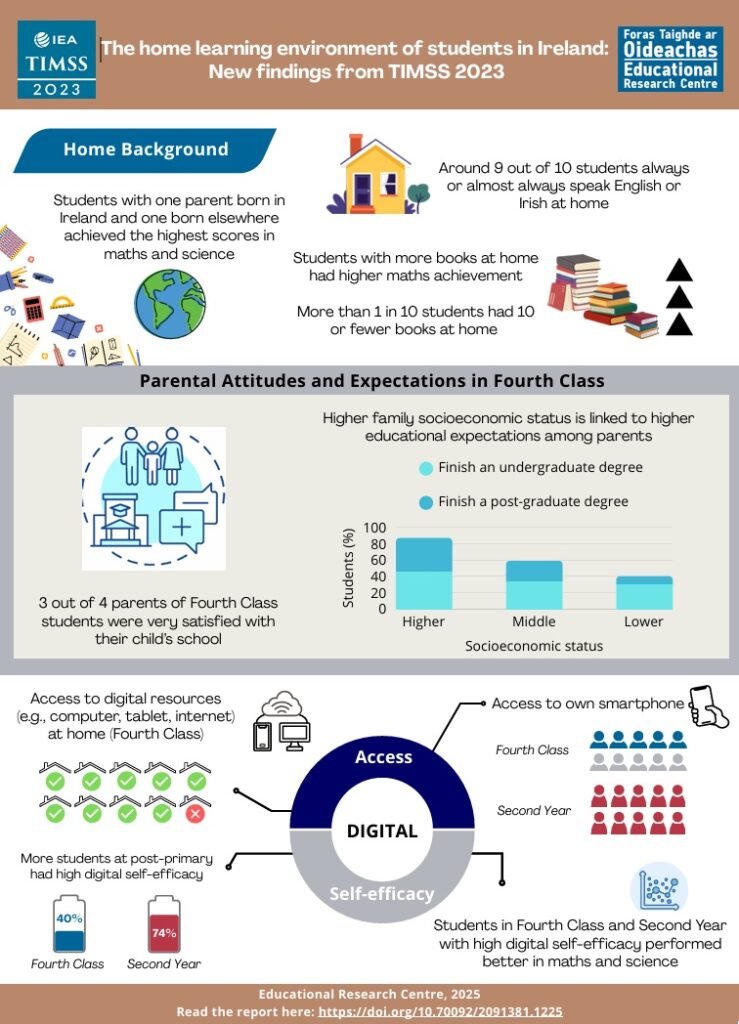
This report focuses on the home learning environment of Fourth Class and Second Year students in Ireland using data from TIMSS (Trends in International Mathematics and Science Study) 2023. It describes findings about students’ socioeconomic status, the availability of selected home resources for learning and home possessions, digital resources at home and use of digital resources for learning, parental education and occupation, home language, early childhood learning and skills, and the attitudes and expectations towards education of parents and students. These data are examined at a nationally representative level and for key subgroups of students: by gender, socioeconomic status, and school DEIS (Delivering Equality of Opportunity in Schools) status. Implications for policymakers in the Irish national context are discussed.
Infographic
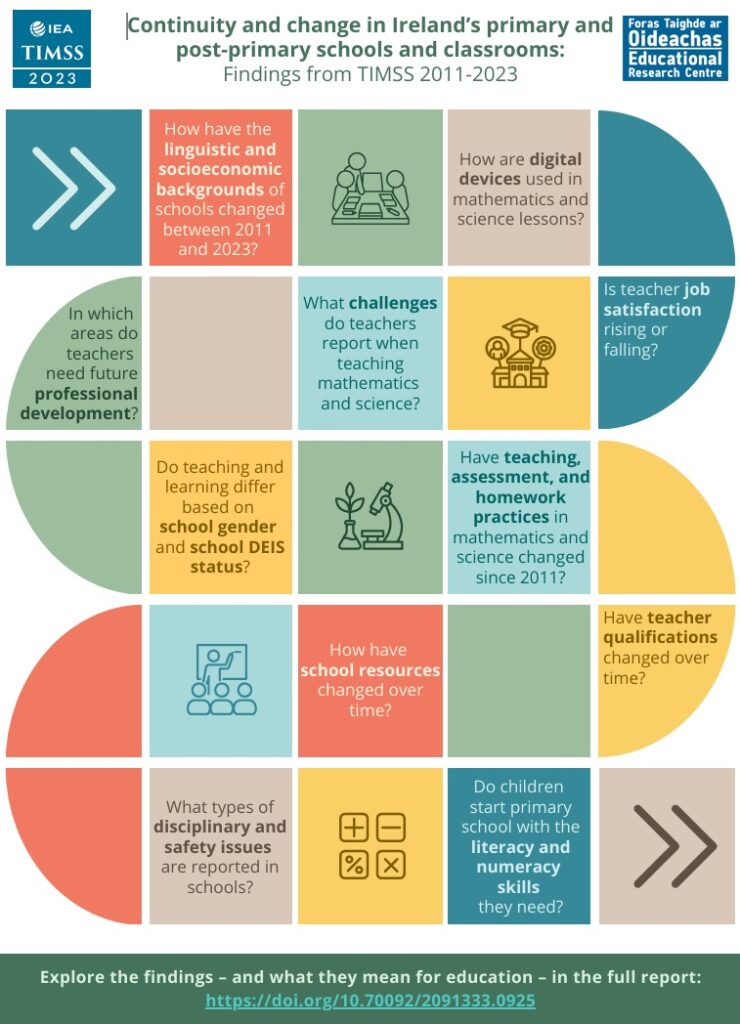
This report provides a comprehensive analysis of developments in schools, classrooms, and the teaching and learning of mathematics and science at primary and post-primary levels in Ireland between 2011 and 2023. Drawing on data from the Trends in International Mathematics and Science Study (TIMSS), collected from students, teachers, and school principals, the report examines trends in school composition, resources, and learning environments. It also explores the organisation and delivery of mathematics and science instruction, assessment practices, instructional challenges, and the integration of digital devices in teaching and learning. These findings are contextualised within national education policies and initiatives, highlighting how Ireland’s education system has adapted to changing pedagogical, technological, and societal expectations. By tracing patterns of continuity and change, the report provides valuable insights into the evolving educational landscape and provides a robust evidence base to inform future policy, practice, and evaluation in mathematics and science education.
e-Appendices associated with this publication: Chapter 2, Chapter 3, Chapter 4, Chapter 5, Chapter 6
Infographic
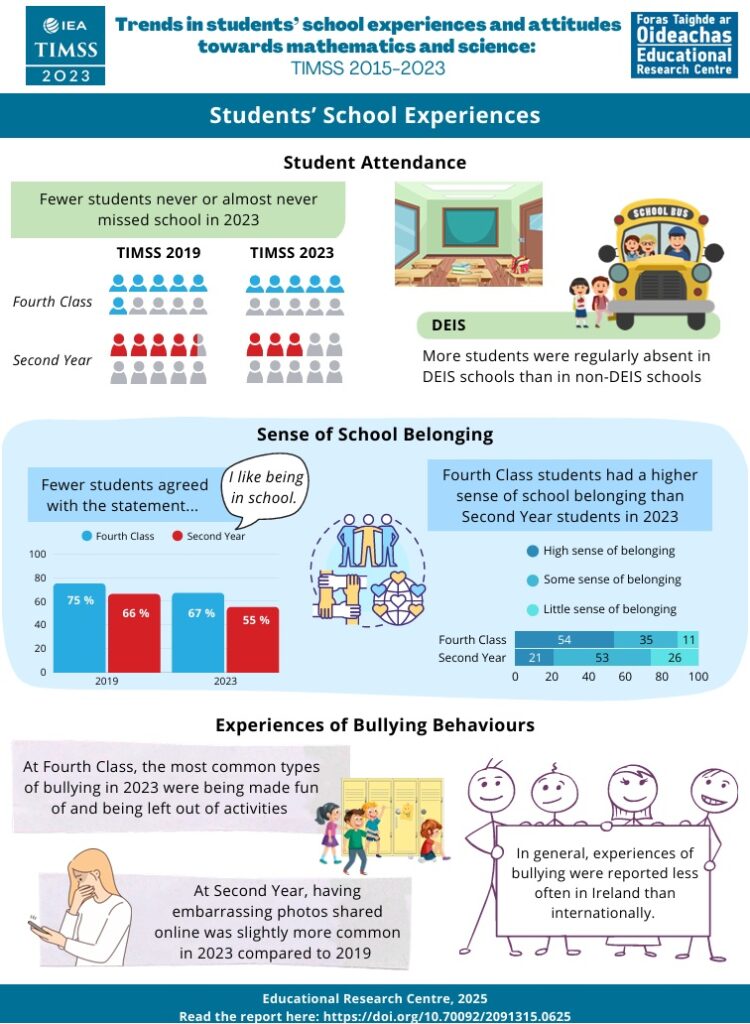
This report describes the school experiences and attitudes of Fourth Class and Second Year students in Ireland. Drawing on data from the 2023 cycle of the Trends in International Mathematics and Science Study (TIMSS), it delves into the experiences of students in relation to their attendance at school, sense of belonging, and experiences of bullying. Also discussed in the report are students’ attitudes towards mathematics and science; in particular, the extent to which students like learning, feel confident, and value mathematics and science. A key feature of this report is that it examines trends in students’ experiences and attitudes across the three most recent cycles of TIMSS (2015, 2019 and 2023). The findings point towards some noteworthy changes in Irish students’ experiences and attitudes over time. Finally, some conclusions and implications for policymakers in Ireland are outlined.
Infographic
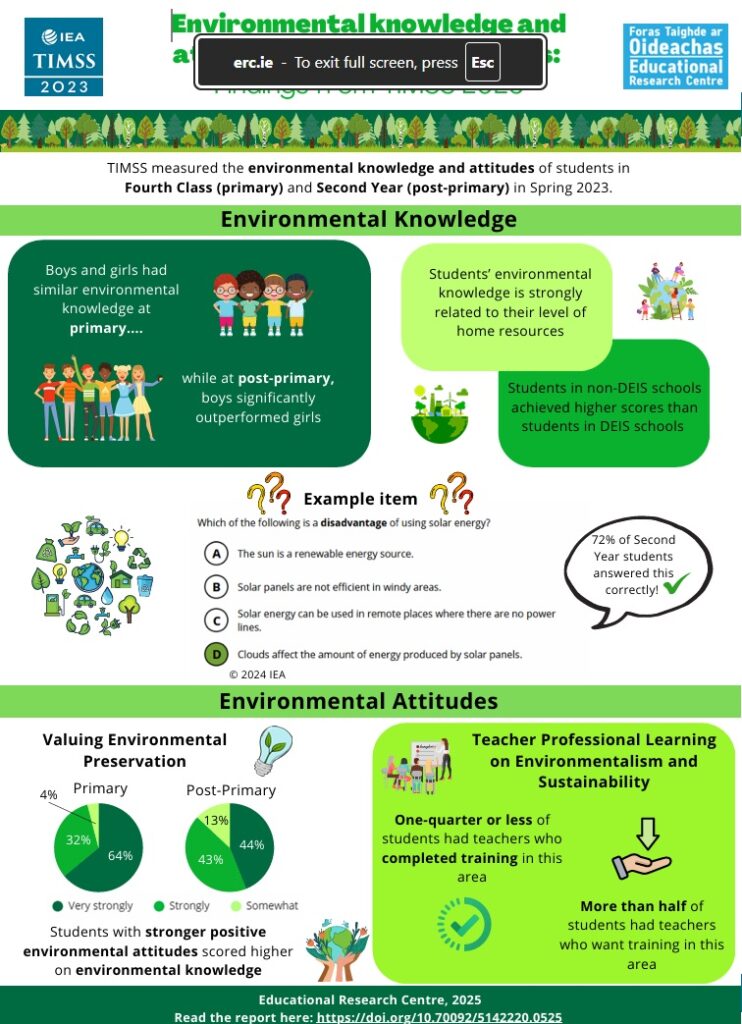
This report presents findings for Ireland for two aspects of students’ environmental awareness that were captured for the first time in the 2023 cycle of TIMSS (Trends in International Mathematics and Science Study). These are (i) students’ environmental knowledge – a subscale of the science assessment, drawing on selected items that are related to environmental and climate issues – and (ii) students’ attitudes towards environmental preservation. The report presents data for Fourth Class (primary) and Second Year (post-primary) students, and also describes environmentally relevant practices and attitudes of their parents, teachers, and principals, as recorded via questionnaires. The findings, which are novel in an Irish context, are discussed with reference to the broader national policy context of environmental awareness in schools.
Infographic
The 2021 National Assessments of English Reading and Mathematics (NAMER) Context Report offers a comprehensive analysis of the factors influencing achievement in Second class English reading and Sixth class maths in Ireland. Due to pandemic-related disruptions, NAMER 2021 was postponed from 2020 and adapted to reduce the testing burden. Pupils had experienced approximately two months of remote teaching prior to returning to face-to-face instruction in March 2021.
Drawing on data from questionnaires administered to pupils, teachers, and school principals, this report situates performance outcomes within broader educational and socio-economic settings. Key variables examined include, pupil background, language, instructional time and homework, teacher professional development, digital practices in school and home, and school factors such as school gender, planning and COVID-19 impact.
Recommendations stress the need to build on existing good practice in schools as well as the strengthening initiatives to improve liking and confidence in reading and mathematics.
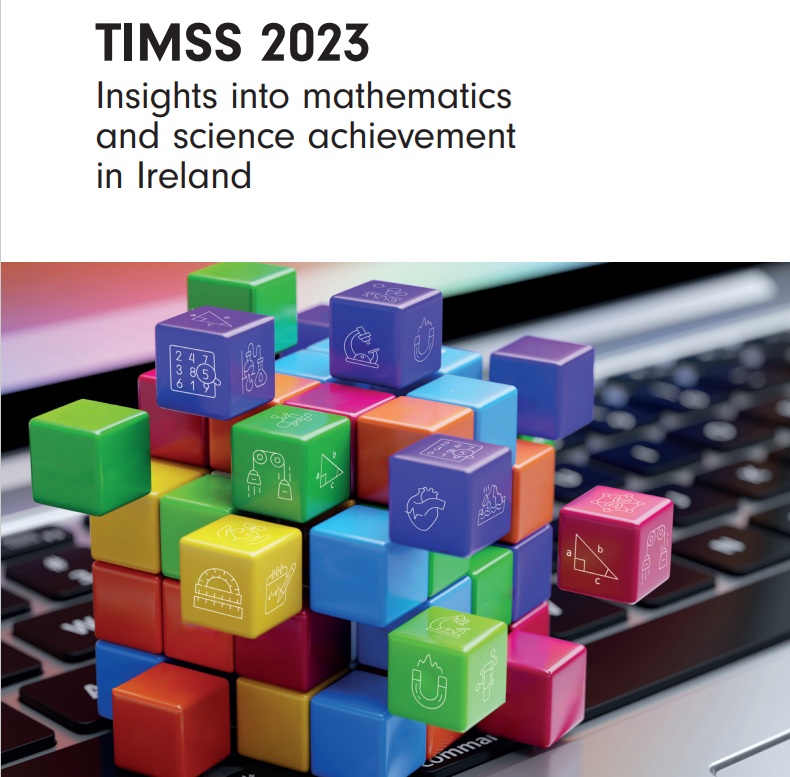
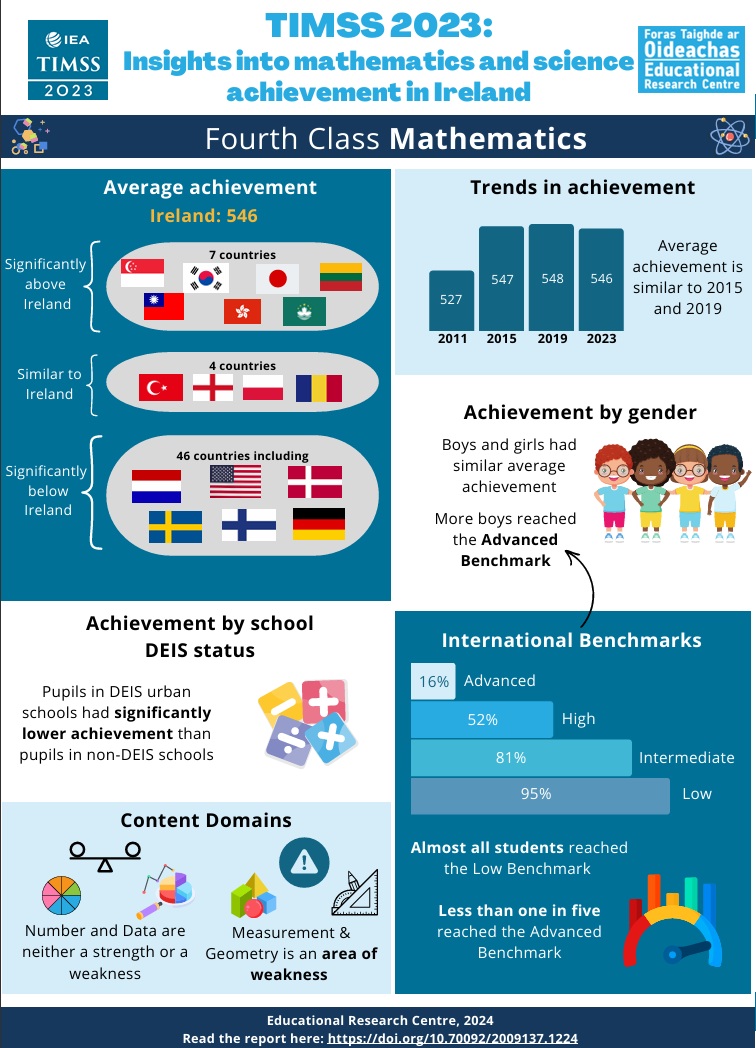
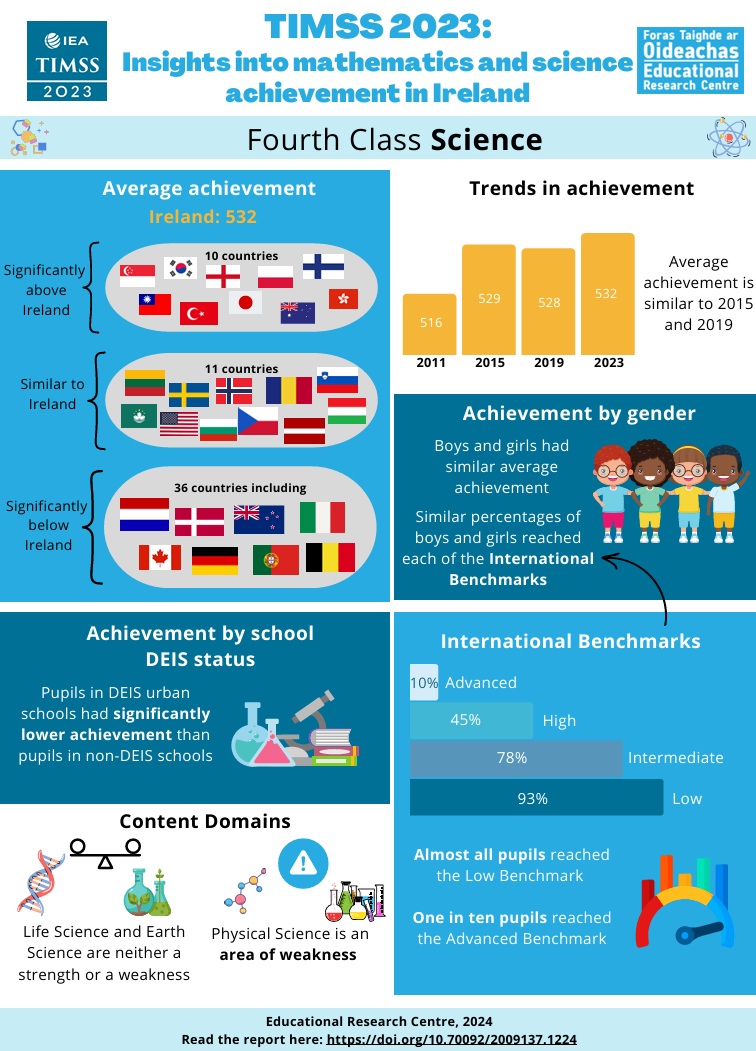
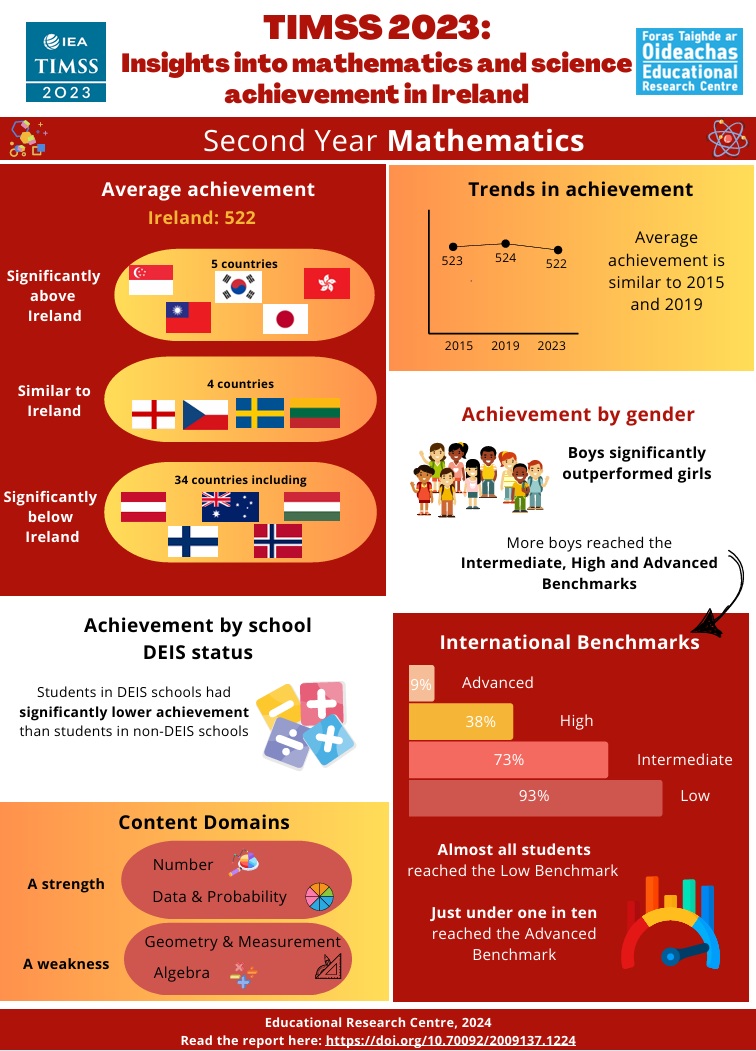
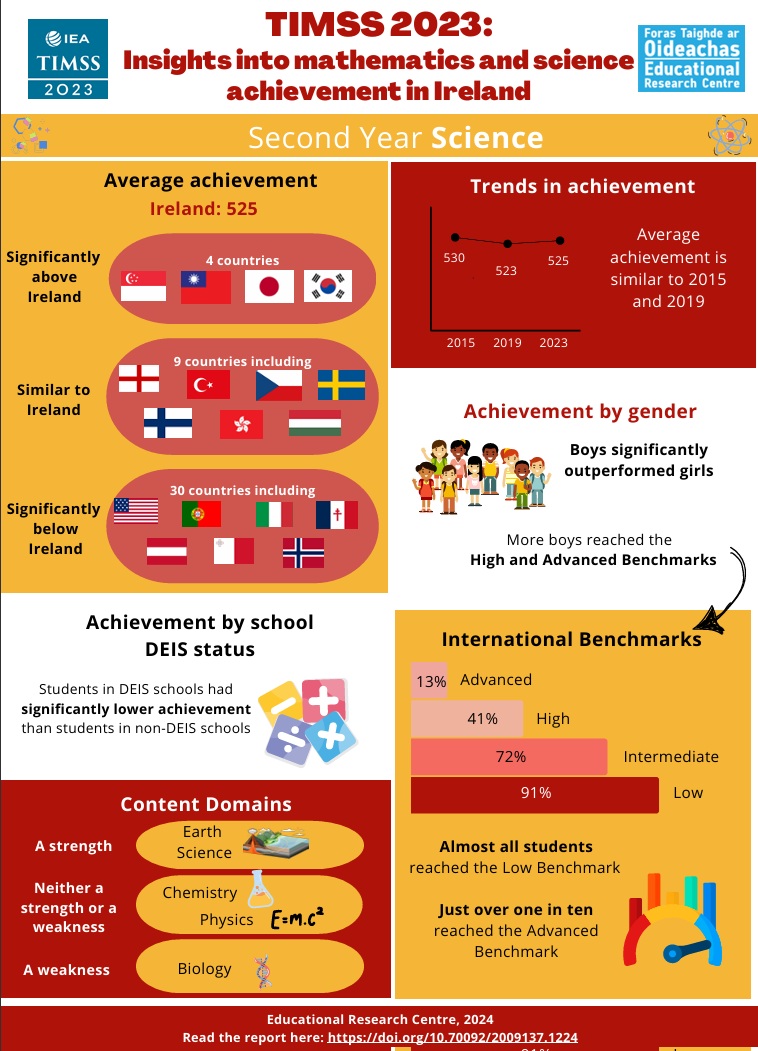
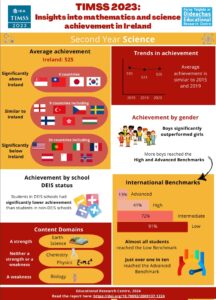
This report presents the achievement results for Ireland in the Trends in International Mathematics and Science Study (TIMSS) 2023. TIMSS assesses the mathematical and scientific knowledge and skills of students in Fourth Grade and Eighth Grade (Fourth Class and Second Year in Ireland). TIMSS is a study of the International Association for the Evaluation of Educational Achievement (IEA) and has been conducted every four years since 1995. TIMSS 2023 is the eighth cycle of the study and included 656,360 students from 65 countries.
This national report focuses on trends in overall achievement in Ireland, as well as the distribution of achievement (performance at various percentiles), student performance at the TIMSS International Benchmarks, relative strengths and weaknesses on the TIMSS content and cognitive domains, and teachers’ reports of curriculum coverage. Performance in Ireland is explored in the context of selected countries; compared with previous cycles of TIMSS where data are available (since 2011 for Fourth Class and since 2015 for Second Year); and, where applicable, examined by gender and by socioeconomic status at both individual level and at school level (DEIS status).
TIMSS 2023 also marks Ireland’s transition from paper-based to digital testing, as part of which Ireland completed a national mode effect study to examine the extent to which any differences in student achievement exist between digital and paper testing. Initial findings from this mode effect study are also presented.
Finally, some conclusions and implications for policymakers in Ireland are outlined.
e-Appendix associated with this publication – download
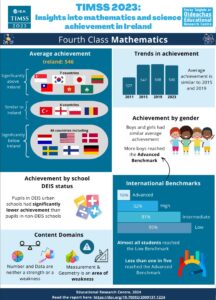
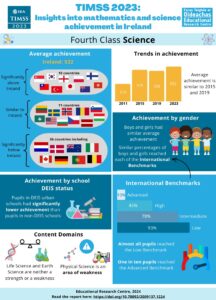
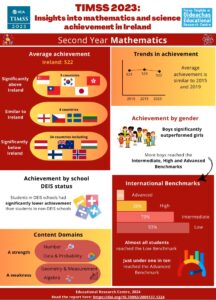
Infographics
This report presents a detailed examination of reading literacy among primary school pupils in Ireland, focusing on the relationships of a wide range of contextual factors with pupils’ reading achievement. Drawing on data from the 2021 cycle of the Progress in International Reading Literacy Study (PIRLS), it delves into the demographic backgrounds and home environments of pupils, as well as their wellbeing, reading behaviours and attitudes, and digital attitudes. The report also explores the characteristics of teachers, their instructional approaches, the challenges they encounter in reading instruction, including challenges related to remote teaching and learning during the COVID-19 pandemic, and the composition, resources, and climate of schools. Key trends and international comparisons are presented, offering a global perspective on Ireland’s educational standing.
The findings are interpreted in light of national education policies and initiatives, particularly the National Strategy to Improve Literacy and Numeracy (2011-2020), and consider the profound impact of the COVID-19 pandemic on education. By identifying critical factors associated with reading achievement, the report provides essential insights into future policy directions and educational practices necessary to support and enhance literacy development in Ireland. It emphasises the importance of addressing inequalities in achievement, ensuring equitable access to educational resources, and adapting to the evolving needs of pupils in a post-pandemic educational environment.
Infographics
Attitudes to and Engagement in Reading
Educational Experiences During the COVID-19 Pandemic
Digital Reading
Low, Medium, and High Achievers in Reading
Reading Activities Inside and Outside of the Classroom
Pupil Wellbeing
Chapters: Executive Summary, Chapter 1, Chapter 2, Chapter 3, Chapter 4, Chapter 5, Chapter 6, Chapter 7, Chapter 8, Chapter 9
Appendices: Chapter 3, Chapter 4, Chapter 5, Chapter 6, Chapter 7, Chapter 8
The Progress in International Reading Literacy Study (PIRLS) assesses the reading literacy of primary school pupils in participating countries worldwide. Ireland has participated in three cycles of PIRLS to date—in 2011, 2016, and 2021—with the Educational Research Centre (ERC) administering the study on behalf of the Department of Education.
This report draws on data from PIRLS 2021. PIRLS was one of two large-scale assessments conducted in primary schools in Ireland in 2021, the other being the National Assessments of
Mathematics and English Reading (NAMER). Together, PIRLS and NAMER data provide valuable insights about primary school pupils’ achievement and experiences following the disruptions
to education caused by COVID-19 within the Irish context, while findings across PIRLS countries further contextualise these outcomes on a global scale.
Findings in this report build on those reported in the PIRLS 2021 national report by Delaney et al. (2023). Readers may find it useful to also consult the international PIRLS 2021 report (Mullis
et al., 2023), the PIRLS 2021 Encyclopedia (Reynolds et al., 2022), as well as the NAMER 2021 performance report (Kiniry et al., 2023) and the NAMER 2021 report on DEIS schools (Nelis &
Gilleece, 2023).
Published in: Large-scale Assessments in Education
Abstract:
Boys in the Kingdom of Saudi Arabia consistently and significantly underperform compared to girls across different grades and subjects, forming one of the largest gender gaps in student achievement in the world. Saudi Arabia offers a unique setting in which boys and girls attend separate schools on a universal basis starting from grade 1. This means that boys and girls are educated only by male and female teachers, respectively, in effect inhabiting parallel education systems. In this context, this study examines the factors that are associated with student achievement in mathematics and science in grades 4 and 8 and the extent to which these associations are different for boys and girls, in an effort to gain insights into boys’ underachievement in mathematics and science in Saudi Arabia. The paper employs data from two recent large-scale assessments of education: Trends in International Mathematics and Science Study (TIMSS) 2019 and Saudi Arabia’s National Assessment of Learning Outcomes (NALO) 2018. A series of hierarchical two-level linear regression models showed that in grade 4, school climate was more strongly associated with boys’ compared with girls’ achievement in both mathematics and science, with boys attending schools of poorer school climate having a considerably lower performance compared with girls attending such schools. The findings also indicated that although greater literacy and numeracy readiness was linked with higher science achievement among boys and girls, grade 4 boys tended to benefit more from this readiness than girls. In addition, the results show that student absenteeism in grade 4 is particularly strongly associated with decreases in mathematics achievement among boys. In grade 8, significant interactions between gender and the extent to which students feel confident in science, the degree of schools’ emphasis on academic success, and teachers’ age are observed. The paper concludes by discussing some of the implications of these findings for educators and policy makers in Saudi Arabia.
Elsayed, M., Clerkin, A., Pitsia, V., Aljabri, N., & al-Harbi, K. (2022). Boys’ underachievement in mathematics and science: An analysis of national and international assessment data from the Kingdom of Saudi Arabia. Large-scale Assessments in Education, 10 (23). https://doi.org/10.1186/s40536-022-00141-9