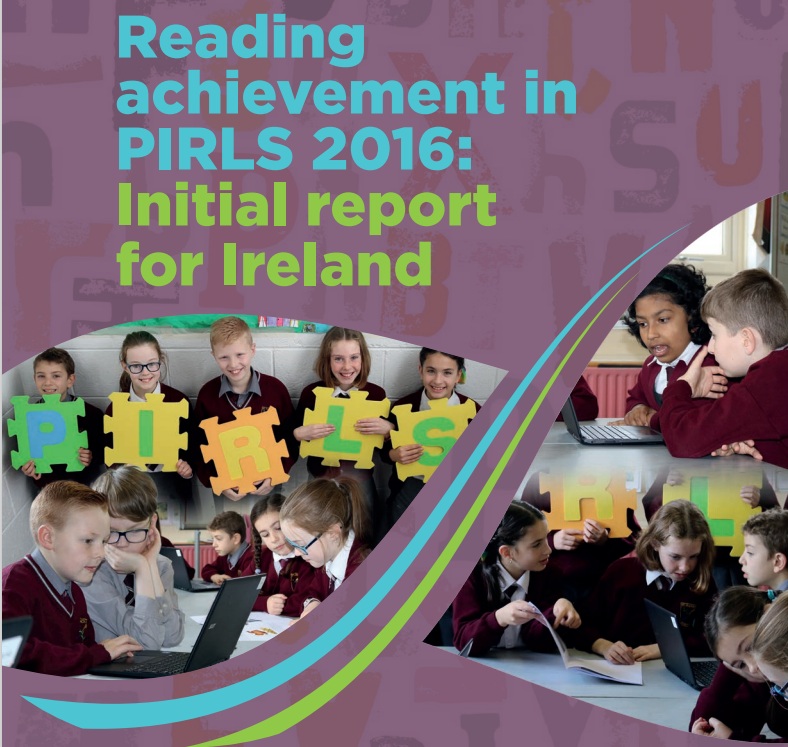
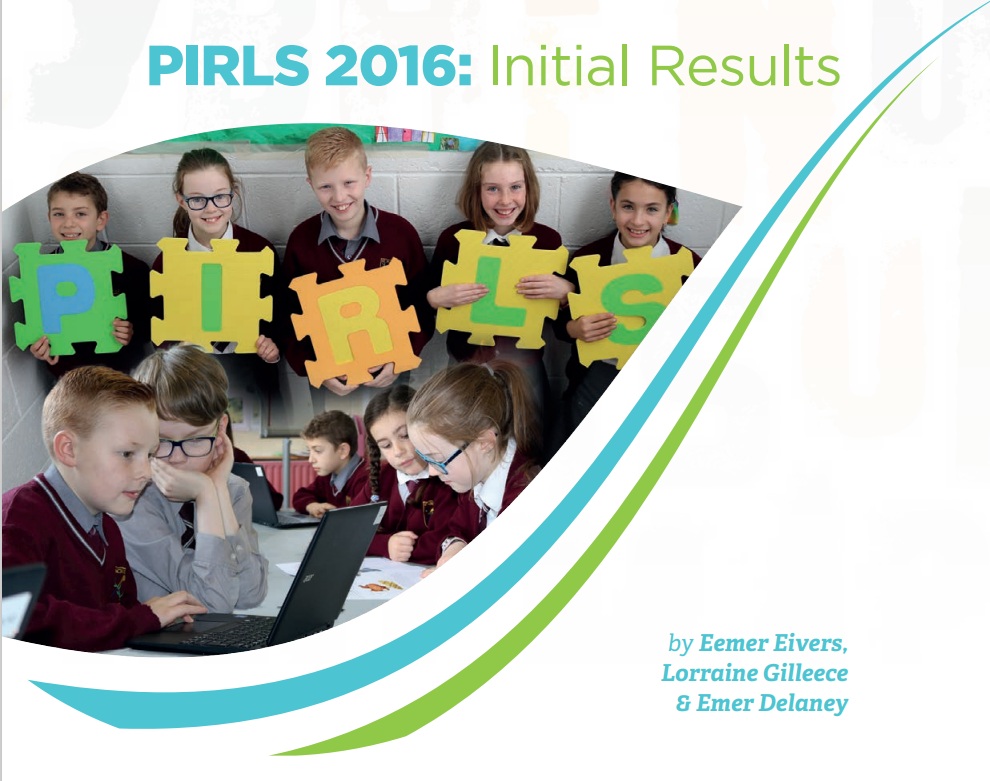
Published in: Irish Journal of Education
Abstract:
The National Strategy to Improve Literacy and Numeracy Among Children and Young People 2011-2020 (hereinafter referred to as the 2011 Strategy) was one of the flagship policy initiatives of the Department of Education and Youth for much of the last 15 years. Amongst other aspects, it set out significant goals relating to initial teacher education, instructional time, parental involvement, assessment practices and use of standardised tests, use of large-scale assessment data for system-level monitoring, and major curriculum reform. The publication of a successor Literacy, Numeracy and Digital Literacy Strategy in 2024 – covering the next decade up to 2033 – creates a follow on from the 2011 Strategy. It therefore seems timely now to look back over the 2011-2023 period to examine the extent to which progress towards a set of aims specified in the 2011 Strategy had been accomplished by its endpoint.
For this analysis, we draw on data from multiple cycles of two large-scale assessments: PIRLS 2011, TIMSS 2011, PIRLS 2021, and TIMSS 2023. These studies, which are conducted at Fourth Class in primary school, fulfil three key criteria for the current purpose: (i) they provide population-level data that allow generalisations to be made to the relevant population of pupils across the country as a whole, rather than just a sample; (ii) they provide comparable datapoints on key topics at either side of the lifetime of the 2011 Strategy; and (iii) they provide data relevant to the teaching and learning of both literacy and numeracy. Findings are presented under the six “pillars” alluded to in the 2011 Strategy and a subsequent 2017 Interim Review. Next, the findings are contextualised from an international perspective, highlighting common drivers for policy creation, approaches used when policymaking, and challenges that arise when trying to evaluate the effectiveness of policy. The findings and contextualisation inform a discussion on the changes and progress in the lifetime of the 2011 Strategy while considering the updated goals and objectives set out in the current Literacy, Numeracy and Digital Literacy Strategy 2024-2033.
McHugh, G., Clerkin, A., & Hastedt, D. (2026). Reflections on the National Literacy and Numeracy Strategy 2011-2020: Evidence from TIMSS and PIRLS (2011-2023). Irish Journal of Education, 50(4), 1-49. https://doi.org/10.70092/IJE.50.04
Published in: IEA Compass: Briefs in Education
Abstract:
In recent decades, large-scale assessments in Ireland have revealed consistent trends, phases of change, and some surprises. This Compass Brief explores how data from large-scale assessments informed Ireland’s National Literacy and Numeracy Strategy 2011–2020, particularly regarding priorities, target-setting, and monitoring. It also examines how related initiatives including curriculum redevelopment and standardized testing reform have reflected large-scale assessment findings. Looking ahead, we outline how large-scale assessments can inform Ireland’s next National Strategy to 2033, which encompasses digital literacy along with literacy and numeracy. More broadly, using Ireland as an example, we identify important issues for policymakers in other countries to consider when using ILSA (international large-scale assessment) data within their own national contexts.
Clerkin, A., & Delaney, E. (2025). How Large-scale Assessments Have Informed Education Policy in Ireland. IEA Compass: Briefs in Education #26. IEA. https://www.iea.nl/sites/default/files/2025-01/CB26-LSA-Data-Informing-Policy-Ireland.pdf
Published in: E-testing and computer-based assessment: CIDREE Yearbook 2024
Abstract:
This chapter traces the use of computer-based testing in schools in Ireland in two contexts: international large-scale assessments (ILSAs) (since 2005) and national standardised testing (since 2016). Learning gleaned from Ireland’s participation in computer-based ILSAs informed the development of a bespoke online platform for administering and scoring standardised tests (the ERC Drumcondra Online Testing System [ERC DOTS]). Conversely, knowledge about schools’ use of ERC DOTS has informed Irish approaches in subsequent ILSA cycles. Across ILSAs and standardised testing, recurrent challenges of computer-based testing are identified, including wide variation in: (i) education technology infrastructure in schools, and (ii) students’ prior experiences using this for schoolwork. Although common to primary and post-primary settings, infrastructural challenges were most apparent at primary level while differences in students’ experience were most pronounced below Grade 3. Adaptations and solutions trialled are discussed. Looking ahead, further possibilities of computer-based testing, including enhanced accessibility, additional item types, and adaptive testing, are considered.
Delaney, E., O’Flaherty, A., Perkins, R., Clerkin, A., & Cunningham, R. (2024). Computer-based testing in Ireland, 2005-2024: Challenges, lessons learned, and future possibilities. In B. Ranđelović et al. (eds), E-testing and computer-based assessment: CIDREE Yearbook 2024. CIDREE. https://www.cidree.org/wp-content/uploads/2024/11/cidree_yearbook-2024.pdf
The Progress in International Reading Literacy Study (PIRLS) assesses the reading literacy of primary school pupils in participating countries worldwide. Ireland has participated in three cycles of PIRLS to date—in 2011, 2016, and 2021—with the Educational Research Centre (ERC) administering the study on behalf of the Department of Education.
This report draws on data from PIRLS 2021. PIRLS was one of two large-scale assessments conducted in primary schools in Ireland in 2021, the other being the National Assessments of
Mathematics and English Reading (NAMER). Together, PIRLS and NAMER data provide valuable insights about primary school pupils’ achievement and experiences following the disruptions
to education caused by COVID-19 within the Irish context, while findings across PIRLS countries further contextualise these outcomes on a global scale.
Findings in this report build on those reported in the PIRLS 2021 national report by Delaney et al. (2023). Readers may find it useful to also consult the international PIRLS 2021 report (Mullis
et al., 2023), the PIRLS 2021 Encyclopedia (Reynolds et al., 2022), as well as the NAMER 2021 performance report (Kiniry et al., 2023) and the NAMER 2021 report on DEIS schools (Nelis &
Gilleece, 2023).
Main Report: PIRLS 2021: Reading results for Ireland.
Delaney, E., McAteer, S., Delaney, M., McHugh, G., & O’Neill, B. (2023).
E-Appendices are available at the following links: E-Appendix Chapter 1, E-Appendix Chapter 3, E-Appendix Chapter 4, E-Appendix Chapter 5, E-Appendix Chapter 6, E-Appendix Chapter 7, E-Appendix Chapter 8, E-Appendix Chapter 9.
Infographics summarising some key findings are also available:
Infographic 1: Overall Results
Infographic 2: Trends, Subscales, Gender & SES
Infographic 3: Reading Experiences and Attitudes
E-Appendices are available at the following links: E-Appendix Chapter 1, E-Appendix Chapter 3, E-Appendix Chapter 4, E-Appendix Chapter 5.
Information sheets summarising some key findings are also available:
Published in: Proceedings of the 4th International Conference of the UNESCO Regional Center for Educational Planning
Abstract:
Ireland has participated in several large-scale international assessments in recent years, including TIMSS and PIRLS at primary level and TIMSS, PISA, ICCS and TALIS at post-primary. These assessments (together with complementary national research programmes) have, to varying degrees, been used to identify particular strengths and weaknesses in the Irish education system and to inform the development of educational policy. This paper presents an overview of Ireland’s experience with international assessments. Recent findings show significant improvements in performance on certain indicators, particularly at primary level and among lower-achieving students. However, these studies also show that the performance of higher-achieving students in Ireland is lower than might be expected, and that some weaknesses persist; for example, in students’ ability to demonstrate higher-order mathematical reasoning or problem-solving skills, and in primary students’ science achievement. The response of policymakers to these findings is discussed in light of the utility of participation in international assessments, cautions in interpreting their results appropriately, and the broader issue of what international assessments should and should not be used for.
Clerkin, A. (2017). Using international assessments to inform education policy in Ireland. In Proceedings of the 4th International Conference of the UNESCO Regional Center for Educational Planning. Dubai: Regional Center for Educational Planning. http://www.erc.ie/wp-content/uploads/2019/02/Clerkin-2017-Using-international-assessments-to-inform-education-policy-in-Ireland.pdf