

Redevelopment of the Drumcondra Early Literacy and Numeracy Tests
At the request of the Department of Education and Youth, the Educational Research Centre (ERC) is redeveloping its tests of early literacy and early numeracy, which are used at the end of Senior Infants and/or the start of First class. The purpose of these tests is to identify children experiencing difficulties in literacy and/or numeracy (via a group-administered test booklet) and to profile aspects of literacy/numeracy that present particular challenges (via a follow-up interview individually administered to pupils who have achieved low scores on the booklet). When published, the new tests will replace the existing Drumcondra Test of Early Literacy (DTEL) and Drumcondra Test of Early Numeracy (DTEN).
Your school has been chosen as part of a nationally representative sample of school settings (e.g. Irish-medium and English-medium, DEIS and non-DEIS, mixed and single-sex). It is important that we try out the tests in a broad range of schools. We value the time and input of teachers, school leaders, ancillary staff, and the children themselves in participating schools and will work with you towards ensuring that it is a positive experience for all. School staff are not required to correct any tests – this will be done by the ERC.
At this stage, we are conducting the validation study of the new group booklets and a pilot of the new individual interviews.
The validation study of the group booklets confirms that the tests work as intended and establishes appropriate cutoff scores to flag pupils who may be having difficulty. Because these booklets are finalised, the ERC will be able to provide results for children who participate. Teachers and parents may be asked to complete a questionnaire to provide additional information about the demographics and experiences of the pupils taking part.
Teachers will be invited to share their feedback on the individual interviews, which are at pilot stage. This will help to inform the development of finalised test materials.
FAQs
Why are the DTEL and the DTEN being redeveloped?

The ERC’s existing tests of early literacy (DTEL) and early numeracy (DTEN) are now about 15 years old. Tests tend to become easier the longer that they are in use, as the content becomes more familiar. We also know that, since the existing tests were developed, the average age at which children start school has increased. Moreover, literacy and numeracy standards in Irish primary schools have improved overall. Putting these facts together, it is likely that the existing tests, which use a previous population as their reference point, are no longer identifying all the pupils who should be flagged as likely to be at risk of literacy/numeracy difficulties.
The ERC carried out a survey of teachers who had used the existing tests. While feedback was broadly positive, teachers identified some testing needs and wishes that we are taking on board.
The intention is that the new tests will:
- Provide up-to-date reference points by comparing children’s skills with those of their peers today;
- Include versions in both Irish and English (where the existing tests are available in English only);
- Offer parallel forms of the group booklets, to minimise copying and to facilitate re-testing where needed;
- Reflect current curriculum specifications, as follows:
- The literacy tests reflect the 2019/2025 Primary Language Curriculum.
- The numeracy tests reflect the fun, engaging and meaningful mathematics foregrounded in the 2023 Primary Mathematics Curriculum, while recognising aspects of the 1999 Primary School Mathematics Curriculum that are likely to remain relevant in classrooms;
Prioritise children’s engagement and enjoyment, with illustrations and scenarios that are attractive, relevant, and reflective of the diversity within classrooms in Ireland today.
Why has my school been asked to participate in this study?
To get reliable information about how the new tests work, we need a substantial number of children to respond to each question (item). To ensure that the items work similarly across different contexts, we also need to make sure that these children are appropriately representative of the target population.
With these things in mind, the ERC created a random sample of 150 schools (75 Irish-medium schools and 75 English-medium schools), including your school. As well as medium of instruction, the sample takes account of school-level characteristics including DEIS status, gender intake, school size, and (for the Irish-medium schools) whether a school is based in a Gaeltacht region or is a Gaelscoil. The sample also has a broad geographical distribution, with most counties in Ireland represented.
We hope that your school will participate in the study because the validity of the data depends in part on the representativeness of the sample of children that take the test.
My school already took part in a pilot of these tests. Why have we been sampled again?
We try to avoid asking the same schools to participate in two sequential stages of a study. However, due to the need to validate tests with a large, representative sample of pupils in Irish-medium schools – a relatively small pool overall – it was necessary to allow some previous pilot schools to be resampled.
We are very grateful to all pilot schools for their help with the study, and particularly grateful to schools that are now sampled for the validation phase as well. If you have concerns about participation, please make contact via email or phone.
How will my school benefit from participating?
The ERC aims to provide schools with high quality tests that serve the needs of pupils, teachers and the whole school community. By participating in this study, your school will be contributing to the development of improved, up-to-date, helpful tests that will be available for schools across Ireland.
We appreciate the generosity of schools that participate in our studies, especially given that individual results will not be available for all stages of the assessment. We are pleased to offer the following for each participating school as a token of appreciation:
- A One4All voucher worth €80 (provided in two instalments: Autumn 2026 and Autumn 2027).
- Free Drumcondra tests of reading and mathematics for sampled First Class pupils for the end of First Class (Spring 2027), with scoring and reporting provided free of charge by the ERC, i.e. no teacher marking required.
- Free literacy and numeracy group booklets once the finalised tests are published (expected 2028). The number of booklets you will receive in each subject will be equivalent to the number of sampled pupils in your school.
For example, if your First Class is sampled and participates in the study and includes 20 pupils, you will be entitled to 20 early numeracy and 20 early literacy test booklets when they are published in 2028, as well as 20 Primary Maths and 20 Primary Reading test booklets in the 2026-27 school year.
What does the role of the school contact involve?
The school contact is a member of school staff who liaises with the ERC about the pilot study. Their role will involve:
- Providing lists of Senior Infants and First Class pupils
- Joining a webinar about administering the new tests and sharing learning with colleagues as needed
- Receiving test materials from the ERC, checking them, and storing them securely
- Distributing letters provided by the ERC to parents/guardians, collecting any withdrawal slips, and informing the ERC of withdrawals
- Planning and coordinating the administration of the test booklets and follow-up interviews
- Where agreed with certain schools, facilitating ERC visits to observe testing and gather feedback from children and teachers about the tests
- Collecting all test materials and returning them to the ERC using the postage label provided
- Liaising with the ERC throughout as queries arise for either party
What is the difference between a pilot study and a validation study?
At this stage, we are conducting the validation study of the new group booklets and a pilot of the new individual interviews.
The main purpose of a pilot study is to check whether the test questions work well. For example, does each test item help us to identify children who are at risk of difficulty? Does each item provide information for teachers to understand the child’s proficiency or gaps in understanding? Do the children respond to a question in a way we did not expect? Do different groups of children interact differently with the items, e.g. do any of the items give boys an advantage over girls, or vice versa? Usually, some test items don’t work in the way we hoped so we pilot more material than we need so that we can discard the items that are least useful.
Following the pilot, we analyse the responses and seek feedback from teachers, experts and children (as appropriate). Based on this information, we make some changes and select the best collection of items to make up the final test. Then we conduct the validation study to confirm that a) the test items and new improvements work as intended and b) the level of difficulty is appropriate for the purpose of the test at the target class level. A validation study involves a nationally representative sample of schools so that the results of the study reflect the proficiency and experiences of children across Ireland. The ERC, with input from early literacy and numeracy experts, then determines the range of scores that would indicate difficulties with literacy and/or numeracy.
What is involved in administering the tests?
Group booklets – administered to small groups of pupils (8 or fewer)
The test booklets consist of two sections (each with an administration time expected to be approx. 15-20 minutes). The sections can be administered on the same day, with a break of at least 15 minutes. A longer break can be given if needed, depending on the classroom context. Alternatively, the two sections can be administered on consecutive days.
Follow-up interviews – administered individually (to some pupils only)
The follow-up interview is expected to take about 30-40 minutes to administer. It can be administered with additional breaks or over multiple days if preferred (e.g. if the child struggles to maintain attention).
What is the timeline for these studies?
An initial pilot study of new test items was conducted in 2024-2025, after which the test content was revised based on item statistics and a wealth of feedback from teachers and children. Now we are repiloting the individual interviews, which required substantial changes, and conducting an even larger validation study of all the tests in which the refined materials are presented to a nationally representative sample of pupils in Senior Infants and First Class. Data from the validation study will be used to determine the cut points that indicate whether a child may be at risk of difficulties in that subject.
| Test Type | Timing | Class Group |
| Group Booklet (Validation) | September – October 2026 |
First Class (one class group) |
| Individual Interview (Pilot) | November – December 2026 | First Class (a selected subgroup of the pupils who completed the group booklet in Sep-Oct) |
| Group Booklet (Validation) | Spring 2027 | Senior Infants (up to two class groups) |
| Individual Interview (Validation) | Spring 2027 | Senior Infants (a selected subgroup of the pupils who completed the group booklet in Spring 2027) |
| Individual Interview (Validation) | Autumn 2027 | First Class (a selected subgroup of the pupils who completed the group booklet in Spring 2027) |
Following the validation study, we will finalise the administration manuals, interpretation guides for teachers, and explanatory materials for parents. We expect to publish the tests in 2028.
How are classes selected to participate?
: In each participating school, one First Class group will be randomly selected by the ERC. Later in the school year, up to two Senior Infants groups will be selected. We will request some basic details about the pupils in selected classes before posting out test materials.
Can pupils be exempted from the tests?
Yes. Pupils may be exempted if, in the professional opinion of school staff, they are unable to engage meaningfully with the group booklet due to disability or very limited familiarity with the language of the test. When making decisions about exemptions, it is worth bearing in mind that these tests are designed to be accessible for children with a wide range of abilities and to be easier than Drumcondra tests at higher grade levels.
Which language will the pilot tests be in for my school?
You are asked to administer the pilot tests in the Language 1 of your school. If you have a concern about administering the tests in the L1 we have on record for your school, please get in touch with our Test Development team.
Do the tests in Irish and English have the same content?
The literacy tests in Irish and English assess many of the same learning outcomes and are broadly similar in structure. However, they contain different content that reflects the specific ways in which literacy skills are applied within the language of the test.
The numeracy tests contain the same content in Irish and English; they are direct translations.
Who will correct the tests?
Teachers will not be required to correct any tests for the validation study. Instead, teachers will be asked to return all test materials to the Educational Research Centre using the postage labels provided and the tests will be scored by ERC staff.
Will I receive results for my pupils?
You will receive results for the children who participate in the validation study of the group booklet. However, the follow-up individual interview is in pilot stage, so it would not be appropriate to provide results while it is under development.
As a token of appreciation, we would like to offer some free test booklets to each participating school.
How are parents informed about the study?
The ERC will send you a box containing all the materials you will need to administer the tests, including an information letter for each child’s parent/guardian. This letter can also be provided digitally on request if schools would prefer to send the letter by email or through their administrative software. We will ask the school contact to ensure that these letters are distributed at least one week before testing. The letter will explain the purpose of the study, describe how their children’s data will be used, and provide a withdrawal slip for parents/guardians to complete if they do not wish their child to participate.
Parents will be directed to additional information about the ERC’s data protection policy on the ERC website and will be provided with direct lines of contact for the ERC Test Development team in case they have any questions.
We intend to gather some demographic information to complement our analysis so we may ask parents/guardians of participating children to complete a brief questionnaire around the time of testing.
Who can I contact for more information?
For general queries, please contact earlylitnum@erc.ie. This inbox is monitored Monday to Friday and will generally be responded to quickly.
If you would prefer to discuss your query over the phone, please contact:
| For Irish literacy (or queries in Irish)
Muireann Bergin (01 8065 213) Róisín Ní Chatháin (01 8065 207)
|
For English literacy queries
Joanne Kiniry (01 8065 220) |
| For numeracy queries (in English)
George Piccio (01 8065 244) Keishia Taylor (01 8065 249) |
Project Oversight
Emer Delaney (01 8065 238) |
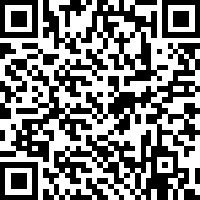
Please complete the short participation form by visiting link or by scanning the QR code below.