


Progress in International Reading Literacy Study (PIRLS)
Background Information
The Progress in International Reading Literacy Study (PIRLS) assesses the reading achievement of pupils in Fourth class (or the equivalent grade level) in countries around the world. PIRLS is a project of the International Association for the Evaluation of Educational Achievement (IEA). It is managed at an international level by the TIMSS and PIRLS International Study Center at Boston College. Within each participating country, a National Research Centre manages the study. In Ireland, this role is carried out by the Educational Research Centre (ERC). The ERC is supported in this work by a National Advisory Committee, which is chaired by the Department of Education and Youth and includes representatives of the main education stakeholders.
First conducted in 2001, PIRLS takes place every five years. Ireland participated for the first time in 2011. In 2016, Ireland was one of 14 countries to administer an additional computer-based assessment of digital literacy in a simulated internet environment, called ePIRLS.
Many countries moved to fully digital assessment for PIRLS 2021. While computer-based testing was undertaken for the field trial in Ireland in spring 2020, the PIRLS main study in Ireland reverted to paper-based testing because of disruptions caused by COVID-19. Furthermore, testing in Ireland and a number of other countries was postponed until autumn 2021 rather than spring and involved pupils who were at the start of Fifth class.
What is assessed?
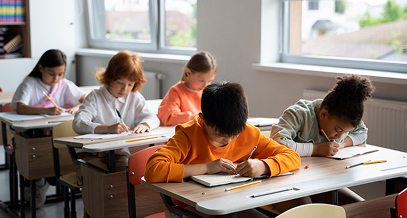
The PIRLS 2026 Assessment Frameworks provide the design and content specifications for assessing pupils’ reading achievement and collecting information about the contexts of their reading development. Further information about the Reading Assessment Framework, the Contextual Framework and the Assessment Design are available from the IEA and Boston College.
Further information
PIRLS 2026 in Ireland
Ireland is one of about 60 participants – countries or benchmarking entities (e.g., regions of countries) – in PIRLS 2026. This cycle of PIRLS completes the transition to a fully digital PIRLS assessment in Ireland. The PIRLS 2026 assessment offers pupils an engaging, visually appealing, and interactive reading assessment experience. Pupils in over 150 schools in Ireland completed the PIRLS 2026 assessment on computer in March/April 2026.
As PIRLS 2026 marks Ireland’s transition from paper-based to digital testing, a national mode effect study is also being carried out. This allows us to examine any differences in pupil reading achievement between tests completed digitally and on paper. Pupils in up to 50 schools in Ireland completed the PIRLS 2026 assessment on paper.
A key purpose of PIRLS is to provide contextual information that can be used to improve teaching and learning. Thus, PIRLS collects detailed information about the curriculum and its implementation, instructional practices and school resources. Questionnaire data are gathered from school principals and Fourth class teachers in participating schools, from pupils themselves and from their parents/guardians. The information collected through these questionnaires is used to provide a more complete picture of the experiences of pupils in the Irish education system. For example, it allows us to answer questions such as ‘do Fourth class pupils who say that they enjoy their reading lessons in school tend to have higher scores in reading?’
PIRLS aims to gather an accurate snapshot of reading levels at a national level and to consider trends over time. The focus is not on any individual pupil or school and no individual pupil or school is ever identified in PIRLS reports.
How are pupils assessed?
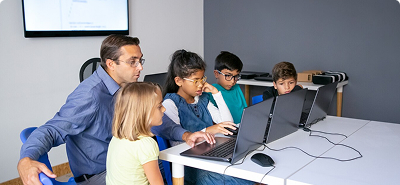
Up to three Fourth classes were randomly selected in sampled schools. Pupils in these classes were asked to read two texts (either on paper or computer) and answer questions about them. The test time for each text was 40 minutes with a short break between the two texts. Pupils were also asked to answer questions about themselves, their reading and their schools. Parents/guardians were asked to complete a questionnaire (either on paper or online) about their child’s reading habits. Class teachers and school principals were also asked to complete a questionnaire online.
Further information was provided to participants in the following video : https://youtu.be/Sk-L6RVQ7CU
Examples of PIRLS test content
Some of the questions used in previous cycles of PIRLS have been made publicly available. Some of the items were multiple-choice, while others required pupils to write an answer.
Click here to see:
GDPR and Data Protection
As well as measuring pupils’ achievement in reading, PIRLS also collects contextual information through questionnaires completed by pupils, parents/guardians, teachers, and principals.
The information collected through these questionnaires is used to provide a more complete picture of the experiences of pupils in the Irish education system. For example, it allows us to answer questions such as ‘do Fourth class pupils who say that they enjoy their reading lessons in school tend to have higher scores in reading?’
More information about confidentiality and retention of data can be found at the links below:

The Data Protection Commission (DPC) has published a resource to assist schools with meeting their data protection obligations when processing the personal data of children. For further information, the Data Protection Toolkit for Schools can be accessed by clicking on the following link: https://www.dataprotection.ie/sites/default/files/uploads/2024-12/DataProtection-ToolkitforSchools_EN_0.pdf [Please note: this link will take you to the website of the Data Protection Commission].
PIRLS National Advisory Committee for Ireland
The national advisory committee oversees the implementation of PIRLS in Ireland and advises on all major aspects of the study, including providing input into national reporting.
National Advisory Committee (PIRLS) – Updated August 2026
| Name | Affiliation |
|---|---|
| Aedín Ní Thuathail | Irish Primary Principals’ Network |
| Áine Lynch | National Parents Council – Primary |
| Patrick Sullivan | National Council for Curriculum and Assessment |
| Máirín Ní Chéileachair | Irish National Teachers’ Organisation |
| Eddie Fox | Educate Together |
| Maeve Price | Social Inclusion Unit, Department of Education and Youth |
| Mark Bohan | Department of Education and Youth |
| Maria McGrath | Department of Education and Youth (Chair – current) |
| Shane Leonard | Oide, Department of Education and Youth |
| Cormac Ó Tuairisg | Gaeloideachas |
| Lorraine Gilleece | ERC, PIRLS 2026 |
| Brendan O’Neill | ERC, PIRLS 2026 |
| Barbora Mackova | ERC, PIRLS 2026 |